Showing posts with label rajputs. Show all posts

Friday, 12 July 2024

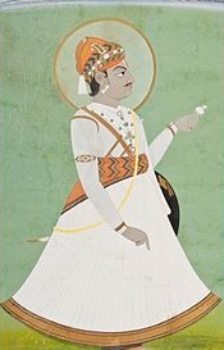
The Lion of Wair: Pratap Singh, a Ruler of Vision and Culture


Pratap Singh, the younger brother of the legendary Suraj Mai, was a ruler who left an indelible mark on the history of the Jat Confederacy. While his brother carved a path of military conquest, Pratap Singh focused on building a thriving state in Wair, a testament to his vision and cultural patronage.


Pratap Singh was a skilled warrior, leading his forces against unruly Zamindars and establishing his dominance over the region. However, his true legacy lies in his administrative prowess. He transformed Wair into a center of learning, establishing a democratic social order that valued the voices of his people. This progressive approach set him apart from other Jat rulers, who often relied on brute force.


Wair under Pratap Singh flourished as a cultural hub. He attracted artists and scholars from Delhi, Agra, and Jaipur, fostering a vibrant artistic scene. The Dussehra festival was celebrated with grandeur, showcasing the rich cultural heritage of the region. Pratap Singh's patronage extended to architecture as well, culminating in the construction of Wairgarh, a formidable citadel that included palaces, courts, an arsenal, and barracks. This architectural masterpiece stands as a testament to his vision and ambition.


Pratap Singh's political acumen was evident in his adoption of Mughal customs. He established a council modeled after the Mughals and Rajputs, demonstrating his understanding of the political landscape and his ability to adapt to changing times. He was known for his polite behavior, superior intellect, kindness, and respect for Muslims, earning him the admiration of his people.


Tragically, Pratap Singh's life was cut short in 1745 due to conflict with his brother Suraj Mai. His untimely death prevented him from fully realizing his vision for an independent state. However, his legacy as a visionary ruler, a cultural patron, and a skilled administrator continues to inspire. Pratap Singh's story reminds us that leadership can take many forms, and that true greatness lies not only in military prowess but also in the ability to build a thriving society and foster a flourishing culture.


Thursday, 27 June 2024

Rawal Ratan Singh: The Legendary Figure of Mewar


Rawal Ratan Singh, a revered figure in Indian history and folklore, is celebrated for his courage, chivalry, and steadfast devotion to honor. He ruled over Mewar, a region in present-day Rajasthan, during a period marked by fierce struggles for sovereignty and cultural identity in medieval India.

Originating from the lineage of the Sisodia Rajputs, Rawal Ratan Singh ascended to the throne of Mewar in the 13th century. His reign coincided with turbulent times when the Rajput kingdoms faced external threats from invading forces, particularly from the Delhi Sultanate under Sultan Alauddin Khalji.

One of the most significant events associated with Rawal Ratan Singh is his marriage to Rani Padmini, a woman of exceptional beauty and intellect. The tale of Rani Padmini and the siege of Chittor is deeply intertwined with his legacy. According to historical and literary accounts, Alauddin Khalji, captivated by tales of Padmini's beauty, besieged the fort of Chittor where she resided with Ratan Singh. The siege is portrayed as a clash between the Rajput ideals of honor and valor against the Sultan's ambition and military might.

Rawal Ratan Singh's defiance of Alauddin Khalji and his refusal to compromise on the honor of his wife became emblematic of Rajput bravery and resistance. The siege of Chittor, although resulting in tragic consequences, exemplified the Rajput ethos of sacrifice and valor in the face of overwhelming odds.

The significance of Rawal Ratan Singh lies not only in his role as a ruler but also as a symbol of Rajput pride and valor. His steadfast defense of his kingdom and his commitment to the ideals of honor and loyalty continue to resonate in Indian cultural narratives, folklore, and literature.

In Indian popular culture, Rawal Ratan Singh is immortalized as a heroic figure who exemplifies the virtues of courage, sacrifice, and unwavering determination. His story has been retold through various mediums including ballads, folk songs, and literature, where he is portrayed as a symbol of resistance against tyranny and injustice.

Furthermore, Rawal Ratan Singh's legacy extends beyond his military exploits. He is remembered for his patronage of the arts, architecture, and culture, contributing to the flourishing of Mewar's rich heritage during his reign. His support for literature and the arts helped foster a vibrant cultural milieu that endured beyond his lifetime.

Despite the tragic end of the siege of Chittor and the fall of the fort to Alauddin Khalji's forces, Rawal Ratan Singh's defiance and the sacrifice of his people became a rallying cry for subsequent generations of Rajputs and Indians alike. His courage and resilience in the face of adversity continue to inspire reverence and admiration.

In conclusion, Rawal Ratan Singh remains a pivotal figure in Indian history, symbolizing the indomitable spirit of the Rajputana rulers and their commitment to honor and valor. His legacy as a defender of Mewar's sovereignty and cultural heritage endures as a testament to the enduring principles of courage, sacrifice, and the pursuit of justice in Indian history and collective memory.

Top of Form

Bottom of Form


Sunday, 23 June 2024

Exploring the Magnificent Rajput Architecture in India.

 Rajput architecture in India stands as a testament to the artistic brilliance and grandeur of the Rajput rulers who left behind a legacy of magnificent palaces, forts, temples, and havelis. Influenced by a blend of Hindu, Islamic, and indigenous architectural styles, Rajput architecture showcases a unique aesthetic that continues to captivate visitors from around the world.


 The origins of Rajput architecture can be traced back to the 8th century when the Rajput kingdoms emerged in various regions of present-day India. The Rajputs, known for their valor and chivalry, also displayed a keen interest in promoting art and architecture. Over the centuries, Rajput architecture evolved under the patronage of different rulers, resulting in a diverse range of architectural styles.

1.       Forts: Rajput forts are iconic structures that served as military strongholds as well as royal residences. Examples include the majestic Amer Fort in Jaipur, the imposing Mehrangarh Fort in Jodhpur, and the formidable Chittorgarh Fort in Rajasthan. These forts showcase excellent craftsmanship and intricate designs, featuring elaborate gateways, courtyards, and palaces.

2.       Palaces: Rajput palaces are known for their opulence and splendor, reflecting the royal lifestyle of the Rajput rulers. The City Palace in Udaipur, the Umaid Bhawan Palace in Jodhpur, and the Junagarh Palace in Bikaner are classic examples of Rajput palace architecture, characterized by intricate carvings, ornate balconies, and colorful frescoes.

3.       Temples: Rajput temples exhibit a unique blend of Hindu and Islamic architectural elements, showcasing intricate carvings, domes, and spires. The Dilwara Temples in Mount Abu, the Jagdish Temple in Udaipur, and the Kandariya Mahadev Temple in Khajuraho are renowned for their exquisite architecture and intricate detailing.

4.       Havelis: Rajput havelis are traditional mansions or courtyard houses that feature beautiful frescoes, intricately carved doorways, and ornamental jharokhas (enclosed balcony windows). The Patwon-ki-Haveli in Jaisalmer, the Nadine Le Prince Haveli in Mandawa, and the Podar Haveli Museum in Nawalgarh are popular examples of Rajput haveli architecture.

Rajput architecture drew influences from various sources, including Mughal, Rajasthani, and Persian styles, resulting in a rich architectural heritage that continues to inspire architects and artists today. The intricate carvings, vibrant murals, and majestic domes of Rajput architecture reflect a harmonious fusion of aesthetics, spirituality, and craftsmanship.

Rajput architecture in India is a treasure trove of architectural marvels that reflect the rich cultural heritage and artistic legacy of the Rajput rulers. From majestic forts and opulent palaces to intricately adorned temples and elegant havelis, Rajput architecture showcases a unique blend of styles and influences that continue to enchant visitors with their timeless beauty and grandeur. As custodians of this architectural legacy, it is essential to preserve and celebrate the rich heritage of Rajput architecture for future generations to appreciate and admire.