Showing posts with label relegious. Show all posts

Wednesday, 15 July 2026

Muharram and Ashura: Honoring the Legacy of Karbala

Muharram, the first month of the Islamic calendar, is revered as one of the most sacred periods in Islam. Unlike other festive occasions, Muharram is marked by solemn remembrance, especially the tenth day known as Ashura. This day commemorates the martyrdom of Imam Hussain, the beloved grandson of Prophet Muhammad, who was slain at the Battle of Karbala in 680 CE. His sacrifice against tyranny and injustice continues to inspire Muslims with themes of courage, devotion, and resistance.

Historical Background

After the death of Prophet Muhammad, disputes arose over succession. Some believed leadership should remain within the Prophet’s family, while others supported election by consensus. Abu Bakr became the first Caliph, followed by Umar and Uthman, both of whom were assassinated. Ali, the Prophet’s cousin and son-in-law, became the fourth Caliph but was also assassinated. His elder son Hasan was poisoned, and his younger son Hussain stood against Yazid, the Umayyad ruler. Hussain’s refusal to pledge allegiance culminated in his martyrdom at Karbala, a defining moment that Symbolizes Unwavering Faith and moral resistance.

Rituals and Observances

Muharram observances vary across communities but share the essence of devotion and remembrance.

  • Shia Mourning: The first ten days are dedicated to mourning through fasting, prayer, and lamentation. On Ashura, processions are held where mourners chant “Ya Hussain” and express grief.
  • Taziahs: Ornate replicas of Hussain’s tomb are carried in processions and later immersed in rivers or seas.
  • White Horse: Symbolizing Hussain’s steed Dul Dul, a decorated horse is led in honor of his sacrifice.
  • Majalis: Assemblies where orators recount the events of Karbala, reinforcing values of faith and martyrdom.
  • Self-flagellation: Some devotees scourge themselves with chains to depict the suffering endured by Hussain and his followers.
  • Sunni Observances: Sunnis mark Muharram with fasting, charity, and prayer. Many believe Ashura coincides with other significant events, such as the creation of Adam and Eve, adding to its sanctity.

Cultural Expressions in India

In India, Muharram is observed with both sorrow and cultural vibrancy.

  • In Uttar Pradesh, marsiyas (elegies) are sung, sometimes sparking sectarian tensions.
  • In South India, masked dancers lead processions, adding regional variety.
  • After rituals, Taziahs are immersed in water bodies, symbolizing the martyrs’ return to the divine.
  • Mosques distribute free meals, known as nazar, reflecting charity and inclusiveness.

Symbolism and Spiritual Meaning

Muharram is not a festival of joy but of remembrance. It embodies sacrifice, justice, and resilience. For Shias, wearing black signifies mourning, while Sunnis emphasize fasting and prayer. The grief expressed in processions is a collective act of solidarity with Hussain’s stand against oppression, ensuring that The Lessons of Karbala Remain Alive.

Conclusion

The Muharram Festival serves as a poignant reminder of the eternal struggle between truth and falsehood. It transcends ritual to become a spiritual journey of reflection, sacrifice, and unity. Whether through fasting, prayer, or mourning, Muslims across the world honor the legacy of Imam Hussain, keeping alive the message of Karbala for generations to come.


Tuesday, 20 August 2024

Goddess Katyayani: The Warrior Goddess of Purity and Devotion


Goddess Katyayani, also known as Katyayini, is a revered deity in Hinduism, particularly known for her role as a powerful and protective form of the Divine Feminine. She is one of the Navadurga, the nine manifestations of the goddess Durga, and is worshipped with great devotion during the Navaratri festival, which celebrates the divine feminine energy.


Goddess Katyayani is often depicted as a warrior goddess, embodying strength and courage. She is usually shown with four arms, holding a sword and a lotus, and often riding a lion or tiger. Her fierce and commanding presence is symbolic of her role in vanquishing evil and restoring cosmic order. The lion or tiger, her vehicle, represents her authority and power, while the sword signifies her ability to cut through ignorance and destroy demons.


According to Hindu mythology, Katyayani was born to the sage Katyayana after the combined prayers of various gods who sought her assistance to defeat the demon Mahishasura, who had caused havoc in the heavens. Her birth was the result of a divine plan to combat the demon’s tyranny, illustrating her role as a savior and protector of righteousness.


Devotees worship Katyayani to seek her blessings for strength, purity, and resolution of their problems. She is particularly venerated for overcoming personal adversities and achieving spiritual goals. Her worship is known for its rigorous and disciplined practices, reflecting her embodiment of purity and dedication.


The celebration of Katyayani is prominent during the Navaratri festival, especially on the sixth day, known as "Katyayani Ashtami." Devotees observe fasting, recite hymns, and perform rituals dedicated to her, seeking her divine intervention for overcoming obstacles and attaining spiritual growth.


In summary, Goddess Katyayani is a significant figure in Hinduism, representing the qualities of strength, purity, and divine protection. Her worship highlights her role as a formidable warrior and a compassionate protector, revered by devotees seeking to overcome challenges and embrace spiritual strength. 

Saturday, 17 August 2024

Goddess Bhuvaneshwari: The Sovereign of the Universe

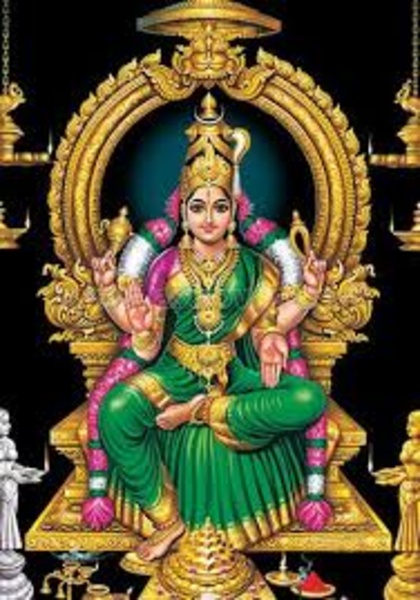
Goddess Bhuvaneshwari, a revered deity in Hinduism, is considered one of the ten Mahavidyas, a group of powerful goddesses associated with the esoteric tradition of Tantra. Goddess Bhuvaneshwari is said to be an incarnation of Goddess Shakti Her name translates to "Queen of the Universe" or "Sovereign of the World," reflecting her role as a divine mother and cosmic ruler. She embodies both creation and protection, symbolizing the nurturing and sustaining aspects of the divine feminine.


Iconography and Attributes


Bhuvaneshwari is often depicted with a serene and majestic demeanor, symbolizing her vast and encompassing nature. She is typically shown with four arms, holding symbolic items such as a lotus, a conch shell, a mace, and a discus. Her tranquil expression and elegant posture represent her role as a benevolent and all-encompassing deity. In some depictions, she is seated on a throne or a lotus, signifying her sovereignty and divine grace.


Mythological Significance


In Hindu mythology, Bhuvaneshwari is associated with the cosmic aspects of creation and preservation. She is believed to govern the universe and maintain cosmic order, ensuring the well-being of all beings. Bhuvaneshwari's role is particularly significant in the Shakta tradition, where she is worshipped as a supreme goddess who transcends the limitations of time and space. Her divine presence is thought to envelop and sustain the entire cosmos.


Worship and Rituals


Devotees honor Goddess Bhuvaneshwari through elaborate rituals and ceremonies, often conducted in temples dedicated to her. Offerings typically include flowers, fruits, and incense, which are used to invoke her blessings. The worship of Bhuvaneshwari emphasizes meditation and spiritual practice, aiming to connect with her divine energy and seek her guidance.


Cultural Impact


Goddess Bhuvaneshwari holds a profound place in Hindu spiritual practice and cultural expressions. Her worship is deeply intertwined with Tantric traditions and is reflected in various forms of art, literature, and devotional practices. She represents the ideal of divine motherhood and cosmic harmony, resonating with devotees as a symbol of ultimate protection and nurturing grace.


In summary, Goddess Bhuvaneshwari stands as a powerful and nurturing figure in Hinduism, embodying the essence of cosmic order and divine sovereignty. Her worship reflects the profound reverence for the feminine divine and her role in maintaining the balance of the universe.


Friday, 16 August 2024

Brahman as God: The Concept of Ultimate Reality in Hinduism


In Hindu philosophy, Brahman is the ultimate, unchanging reality that underpins and transcends the universe. Brahman as God is held to be the Ultimate Reality which is the core concept of Vaishnava belief. Unlike personal deities with specific attributes and forms, Brahman is an abstract, formless, and infinite concept representing the essence of all existence.


Definition and Characteristics


Brahman is central to various schools of Hindu thought, particularly Advaita Vedanta, a non-dualistic tradition. In this view, Brahman is the singular, absolute reality, beyond the limitations of time, space, and individuality. It is described as *Sat-Chit-Ananda*—being, consciousness, and bliss—emphasizing that Brahman encompasses all aspects of reality in its purest form.


Brahman is often perceived as impersonal and formless, transcending all specific attributes. It is not confined to any particular deity or image but is the source and essence of everything. This universal principle is beyond comprehension and description, yet it is the underlying reality of all existence.


Philosophical Significance


In the Advaita Vedanta tradition, Brahman is synonymous with the true self, or *Atman*. The realization of one's own self as Brahman is the ultimate goal of spiritual practice. According to this philosophy, the apparent diversity and multiplicity of the world are illusions (*Maya*) that obscure the true, unified nature of Brahman. Liberation, or *Moksha*, is achieved through the realization of this fundamental unity, leading to freedom from the cycle of birth and rebirth (*Samsara*).


Brahman in Other Traditions


While Advaita Vedanta emphasizes the impersonal aspect of Brahman, other Hindu traditions incorporate Brahman into a more personal framework. In these contexts, Brahman is sometimes associated with the trimurti (trinity) of Brahma the creator, Vishnu the preserver, and Shiva the destroyer, or is manifested in various forms of deities representing different aspects of divine reality.


Conclusion


Brahman represents the profound, all-encompassing reality in Hinduism, transcending all forms and concepts. It is the ultimate truth and the essence of all existence, guiding followers toward a deeper understanding of the universe and the self. Through the pursuit of spiritual knowledge and realization, individuals seek to connect with this ultimate reality, experiencing unity with the divine.

Wednesday, 14 August 2024

Goddess Ambika: The Multifaceted Deity in Hindu Tradition

Goddess Ambika is a revered figure in Hinduism, known for her multifaceted roles and profound significance in various regional and sectarian traditions. The name "Ambika" means "mother" in Sanskrit, reflecting her nurturing and protective qualities. She is primarily worshipped as a form of the Divine Mother and is often associated with power, fertility, and spiritual wisdom.


In Hindu mythology, Ambika is considered an embodiment of Shakti, the divine feminine energy. Her worship is prominent in several regions of India, particularly in Gujarat and Maharashtra, where she is honored as a guardian deity. She is also closely linked with several other goddesses, including Durga, Parvati, and Kali, highlighting her versatile and dynamic nature.


One of the most significant forms of Ambika is her association with the Ambika Mata temple in the Gir Somnath district of Gujarat. Here, she is venerated as a powerful goddess who protects devotees and grants them blessings. The temple's legends narrate her as a fierce and compassionate deity who safeguards her followers from evil forces and calamities.


Ambika's iconography often depicts her with multiple arms, each holding symbolic items such as weapons, flowers, or ritual implements. These representations emphasize her role as a divine protector and a source of spiritual strength. In some traditions, she is shown riding a tiger or lion, further symbolizing her fierce nature and dominance over demonic forces.


In addition to her roles as a protector and nurturer, Ambika is also associated with fertility and abundance. In agricultural communities, she is worshipped to ensure bountiful crops and prosperity. Her festivals and rituals often include offerings of fruits, flowers, and grains, celebrating her role in sustaining life and providing for her devotees.


Goddess Ambika’s worship underscores the multifaceted aspects of divine femininity, blending strength, compassion, and nurturing qualities. Her diverse forms and roles illustrate the rich tapestry of Hindu devotional practices and the deep reverence for the Divine Mother in the spiritual life of her followers.


Tuesday, 13 August 2024

Goddess Chandraghanta: Symbol of Strength, and Divine Protection


Goddess Chandraghanta, an important deity in Hinduism, is venerated primarily in the Shakta tradition, where she is celebrated as a form of Goddess Durga. Her name translates to "the one with a moon-shaped bell," derived from "Chandra" (moon) and "Ghanta" (bell). This symbolism reflects her role as a powerful and benevolent force, embodying both serenity and strength.


Depicted with a bell-shaped crescent moon on her forehead, Goddess Chandraghanta is often shown with ten arms, each holding various weapons and symbols. These arms signify her capability to combat evil forces and protect her devotees. She rides a tiger or lion, symbolizing her mastery over fear and her supreme power.


Chandraghanta is typically worshipped during the Navaratri festival, especially on the third day, which is dedicated to her. This day is known as "Chandraghanta Ashtami." Devotees believe that invoking her blessings brings peace, courage, and success in overcoming obstacles. She is also associated with the destruction of demons and negative energies, making her a significant protector against malevolent influences.


Her iconography and attributes are deeply symbolic. The moon on her forehead represents tranquility and the calming influence of her presence, while the bell-shaped crescent denotes the dispelling of darkness and ignorance. The various weapons she wields are tools to eradicate evil and restore cosmic order, emphasizing her role as a fierce protector and destroyer of demons.


Goddess Chandraghanta's worship involves chanting her mantras, offering flowers, and performing elaborate rituals. Devotees often seek her blessings for overcoming challenges, achieving goals, and finding inner strength. Her divine energy is believed to infuse worshippers with resilience and purity, guiding them towards spiritual and material success.


In essence, Goddess Chandraghanta represents a harmonious blend of compassion and power, embodying the ideal balance between serenity and force. Her worship is a testament to her role as a formidable yet nurturing force in the spiritual realm.


Monday, 12 August 2024

The Nature of God in the Teachings of Guru Nanak

Guru Nanak, the first guru of the Sikhs stated that the Lord is the Universe. Guru Nanak Dev Ji, the founder of Sikhism, offers a distinctive understanding of the Nature of God that profoundly influences Sikh theology and spirituality. His teachings, encapsulated in the Guru Granth Sahib—the central religious scripture of Sikhism—present a vision of God that is both transcendental and immanent, emphasizing unity, omnipresence, and compassion.


Guru Nanak's conception of God is grounded in the idea of Ek Onkar, which translates to "One God" or "There is Only One God." This principle underscores the monotheistic nature of Sikhism, asserting that God is singular, beyond any duality or division. God is considered the ultimate reality, transcending all forms and limitations of the material world.


According to Guru Nanak, God is Nirgun (without attributes) and Sargun (with attributes). This duality reflects that while God is beyond human comprehension and cannot be confined to any specific qualities, God also manifests in creation and can be experienced through the divine attributes of love, justice, and mercy. The divine essence pervades all aspects of existence, suggesting that God is both the source of all creation and immanent within it.


Guru Nanak emphasizes that God is Akhand (infinite) and Akal (eternal), existing beyond time and space. This view highlights God's omnipresence and omnipotence. God is not limited by physical constraints or temporal changes but is an all-encompassing presence that sustains and pervades the universe.


In addition, Guru Nanak teaches that God is Karim (compassionate) and Rakhna (protector), offering guidance and support to all beings. This compassionate nature of God calls for humans to practice equality, justice, and humility, reflecting divine virtues in their own lives.


The Nature of God in Guru Nanak's teachings encourages an understanding of the divine that transcends sectarian boundaries and promotes a universal sense of oneness and unity. Through devotion, meditation, and righteous living, individuals are invited to experience and reflect the divine presence in their everyday lives, aligning themselves with the profound spiritual truths articulated by Guru Nanak.


Thursday, 8 August 2024

Lord Hayagriva: The Divine Guardian of Wisdom

Lord Hayagriva is a venerated deity in Hinduism, particularly within the Vaishnavism tradition, which worships Vishnu as the Supreme Being. His name, meaning "Horse-Necked One," denotes his unique form—a fusion of human and horse features. Hayagriva embodies the divine aspect of knowledge and wisdom, making him a central figure for devotees seeking intellectual and spiritual enlightenment.

Iconography and Symbolism

Hayagriva is depicted with the body of a human and the head of a horse. This unusual form symbolizes his role as the protector and preserver of sacred knowledge. He is often shown holding the Vedas (ancient Hindu scriptures), emphasizing his association with learning and wisdom. His horse head signifies his swift and profound understanding, while his human body represents accessibility and compassion.

Mythological Significance

One of the most notable myths involving Hayagriva is his role in retrieving the Vedas from the demon Madhu-Kaitabha. According to legend, these sacred texts were stolen, causing a decline in knowledge and dharma (righteousness). Vishnu, in his Hayagriva form, defeated the demon and restored the Vedas, ensuring the continuity of divine wisdom and guidance for humanity. This myth highlights Hayagriva's essential function in safeguarding and perpetuating sacred knowledge.

Worship and Practices

Hayagriva is particularly worshipped in South India, with notable temples dedicated to him in Karnataka and Tamil Nadu. The Hayagriva Temple in Melukote, Karnataka, is renowned for its celebrations of Hayagriva Jayanti, an annual festival honoring the deity. Devotees engage in rituals, recite prayers, and study scriptures to seek Hayagriva's blessings for intellectual growth and success.

Cultural Impact

Hayagriva’s worship underscores the Hindu belief that knowledge is a divine gift essential for spiritual and personal development. His reverence extends to scholars and educators who invoke his blessings for wisdom and clarity.

In summary, Lord Hayagriva is a significant figure in Hinduism, embodying the divine essence of knowledge. His unique form and mythology reflect his role as the guardian of wisdom, making him a crucial deity for those seeking enlightenment and intellectual advancement.