Showing posts with label ruler. Show all posts

Monday, 22 July 2024

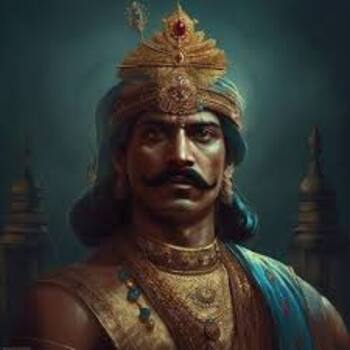
Prithviraj III Chahamana: The Legendary Ruler of India


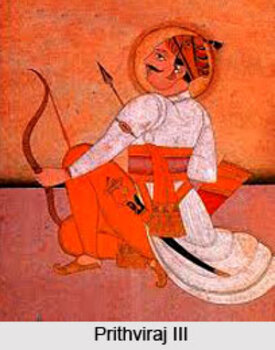
Prithviraj III, also known as Prithviraj Chauhan, stands as one of the most celebrated figures in Indian history. Ruling from 1177 to 1192, he was a member of the Chahamana (Chauhan) dynasty and is remembered not only for his valor and military prowess but also for his significant contributions to Indian culture and governance. His reign marks a critical period in the historical narrative of India, characterized by both grandeur and tumult, as he grappled with the challenges posed by emerging powers, most notably the Ghurid invasions led by Muhammad of Ghor.

Born in 1168, Prithviraj III was the son of Somesvara and inherited the throne at a young age. He ascended to power amidst growing tensions and rivalries among regional kingdoms. His capital, Ajmer, became a focal point of his reign, serving as a hub of political and cultural activity. Prithviraj was not just a monarch; he was also a skilled warrior. His early battles against neighboring Rajput clans helped him consolidate power and establish his dominance in northwestern India.

Prithviraj Chauhan’s military achievements are legendary, and he is often depicted in tales of chivalry and valor. His most famous victory was against the powerful ruler of Gujarat, Bhimdev II, and later against the Muslim military leader Muhammad of Ghor. Prithviraj defeated Ghor in the First Battle of Tarain in 1191, a victory that solidified his reputation as a formidable warrior and leader.

However, this triumph was short-lived as the following year, in 1192, Muhammad of Ghor mounted a more substantial offensive. In the Second Battle of Tarain, Prithviraj faced overwhelming odds against Ghor's forces, which were better organized and strategically aligned. The battle ultimately led to Prithviraj's defeat and marked a significant shift in the power dynamics of northern India.

Prithviraj was not only a warrior but also a patron of the arts and culture. His court became a center of literature and learning, attracting scholars, poets, and artists. One of the most notable literary figures of his time was Chand Bardai, who composed the epic poem "Prithviraj Raso," celebrating the king’s life and valor. This text not only highlights Prithviraj’s achievements but also encapsulates the cultural ethos of the time, blending historical facts with legendary embellishments.

Prithviraj Chauhan's legacy transcends his military accomplishments. His fierce resistance against foreign invasions has made him an icon of Rajput valor and chivalry. The narratives surrounding his life have been romanticized in folklore, with stories of his love for Sanyogita and his heroic battles becoming an integral part of Indian cultural consciousness.

The defeat at Tarain, while a turning point that led to the establishment of Muslim rule in northern India, also highlighted the resilience of the Indian spirit. Prithviraj's courage in the face of adversity continues to inspire generations, representing the struggle to uphold sovereignty and dignity in times of turmoil.

Prithviraj III Chahamana remains a pivotal figure in the history of India, embodying the complexities of kingship in a time of change. His reign is marked by significant military, cultural, and architectural milestones that have left an enduring impact on Indian history. As a ruler, a warrior, and a patron of the arts, he exemplified the ideals of bravery and leadership, ensuring that his legacy remains etched in the annals of time. Prithviraj Chauhan is a symbol of resilience, courage, and a steadfast commitment to one’s culture and identity in the face of relentless challenges.


Saturday, 20 July 2024

The Princes of Patiala: A Glimpse into History and Heritage


The princely state of Patiala, located in the northern Indian state of Punjab, is steeped in a rich history marked by a blend of tradition, culture, and significant political influence. The lineage of Patiala's rulers, known as the Phulkian dynasty, traces its origins to the late 17th century.

Patiala was established in 1763 by Baba Ala Singh, a military commander and leader of the Sikhs. He sought to create a separate entity for the Sikhs amidst the political turmoil following the decline of the Mughal Empire. Initially, Patiala was a small town, but under Ala Singh's leadership, it began to flourish. He was recognized for his administrative skills and military acumen, which helped him consolidate power and expand the territory. Patiala became a key stronghold for the Sikhs and an essential center for commerce and culture.

The peak of the Patiala dynasty occurred under the rule of Maharaja Amar Singh, who ascended the throne in the early 19th century. His reign marked significant socio-economic development as well as cultural patronage. Amar Singh emphasized modernization, leading to improvements in infrastructure, education, and health facilities. His progressive policies laid the groundwork for Patiala to emerge as an influential princely state in Punjab.

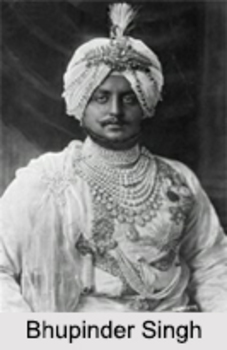
Maharaja Adhiraj Bhupinder Singh, who ruled from 1900 to 1938, is perhaps the most renowned ruler of Patiala. An influential figure in the British-Indian landscape, Bhupinder Singh was known for his extravagant lifestyle and cultural contributions. He established the Patiala State, a prominent and prosperous entity in British India, and had a significant influence on Sikh identity. He was an avid sports enthusiast, actively promoting athletics and ensuring that Patiala was home to significant sporting events.

During British rule, the princes of Patiala had a crucial role in the political landscape. They maintained a delicate balance between loyalty to the British and the aspirations of the Indian independence movement. Bhupinder Singh, for instance, was a member of the Viceroy's Executive Council, providing him a platform to influence decisions at the national level. However, his relationship with the British also drew criticism during the growing wave of nationalism in India.

Post-independence, the princely states were integrated into the Indian Union. The last Maharaja of Patiala, Adhiraj Capt. Amarinder Singh, willingly ceded his rule and participated in the democratic process, further solidifying his family's legacy in the region. The political clout of the Patiala royal family transitioned from princely power to active participation in Indian politics, with members of the family continuing to play significant roles in state governance.

The rulers of Patiala significantly impacted Punjabi culture, art, and architecture. They were the patrons of music, literature, and fine arts. The Qila Mubarak, the magnificent palace complex in Patiala, stands as a testament to their architectural achievements. The rich traditions of Punjabi music, especially the Patiala Gharana of classical music, owe much to the royal family's encouragement of cultural activities.

In contemporary Punjab, the legacy of the Patiala royals continues to endure, influencing not only local culture but also the Indian political spectrum. The story of the princes of Patiala is one of resilience, adapting to changing times while preserving the rich traditions of their heritage. The Phulkian dynasty remains an emblem of pride for many Punjabis, representing an era of splendor and cultural richness that shaped the historical narrative of the region.


Thursday, 18 July 2024

Legacy of Kanthirava Narasaraja I: Mysore's Golden Era


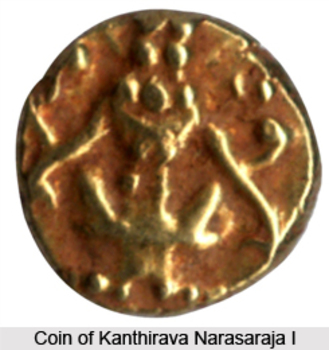
 Kanthirava Narasaraja I, a prominent ruler of the Nayaka dynasty in 17th-century South India, left an enduring legacy through his strategic governance and cultural patronage. Ascending to the throne of Mysore in 1638, he ruled until 1659, shaping the region's history during a pivotal era.

Kanthirava Narasaraja I's reign marked a significant period in Mysore's history, characterized by military achievements, administrative reforms, and cultural advancements. His leadership navigated challenges and fostered prosperity, leaving an indelible mark on the kingdom.

Narasaraja I distinguished himself through strategic military campaigns that expanded Mysore's territorial boundaries and secured the kingdom against external threats. His adept administration strengthened internal governance structures, ensuring stability and growth.

Beyond military exploits, Narasaraja I was a notable patron of arts and literature. Under his rule, Mysore flourished culturally, with significant advancements in Kannada literature and the arts. He supported scholars, poets, and artists, contributing to a vibrant cultural milieu.


The legacy of Kanthirava Narasaraja I endures as a testament to his leadership and vision. His contributions to Mysore's military strength, administrative efficiency, and cultural richness shaped the kingdom's identity and historical trajectory. His reign represents a flourishing era in South Indian history, celebrated for its achievements in governance and cultural patronage.

Kanthirava Narasaraja I remains a revered figure in the annals of Mysore's history, remembered for his multifaceted leadership and enduring contributions to military prowess, administrative reform, and cultural flourishing. His legacy continues to inspire appreciation for his role in shaping the vibrant heritage of South India.


Wednesday, 17 July 2024

Virarajendra Chola I: Architect of Chola Resurgence


Virarajendra Chola I, also known as the Kalari-Vira, was a renowned ruler of the Chola dynasty who reigned during the 11th century CE. His leadership and military prowess played a pivotal role in shaping the history of the Chola Empire, making him a legendary figure in ancient South Indian history.

Born into the illustrious Chola lineage, Virarajendra Chola I inherited a legacy of power and conquest. He ascended to the throne in 1063 CE, following the death of his father, Rajendra Chola II. Despite facing internal strife and external threats, Virarajendra proved himself to be a formidable warrior king who successfully defended the Chola Empire and expanded its territories through a series of military campaigns.

One of the most significant events during Virarajendra Chola I's reign was his successful military expedition against the Chalukyas of Kalyani. The Chalukyas, who were powerful rivals of the Cholas, posed a threat to Chola dominance in the region. However, Virarajendra's strategic military planning and decisive leadership led to the defeat of the Chalukyas, solidifying Chola control over the Deccan region and establishing the Cholas as the preeminent power in South India.

Virarajendra Chola I's military campaigns were not limited to the Deccan region. He also led successful expeditions into the Pandya territories in southern Tamil Nadu, further expanding Chola influence and asserting dominance over rival kingdoms. His military achievements earned him the title of Kalari-Vira, or "the Brave in the Field," highlighting his reputation as a fearless and skilled warrior king.

In addition to his military conquests, Virarajendra Chola I was known for his administrative acumen and patronage of the arts. He supported the construction of magnificent temples, such as the Airavatesvara Temple in Darasuram, which stands as a testament to the Chola dynasty's architectural and artistic achievements. Virarajendra's patronage of the arts and culture contributed to the flourishing of literature, music, and dance during his reign.

Despite his military successes and cultural contributions, Virarajendra Chola I faced internal challenges within the Chola Empire. Revolts and uprisings among regional governors and nobles posed a threat to his authority, requiring him to navigate complex political situations and maintain stability within his realm. However, Virarajendra's resilience and leadership skills enabled him to overcome these challenges and uphold Chola power and prestige.

The reign of Virarajendra Chola I marked a period of both military conquests and cultural achievements for the Chola Empire. His legacy as a warrior king and patron of the arts endures through the numerous inscriptions, temples, and artworks that bear witness to his rule. Virarajendra's contributions to the Chola dynasty and South Indian history continue to be celebrated and studied as a testament to his enduring legacy as a resilient and visionary ruler.


Tuesday, 16 July 2024

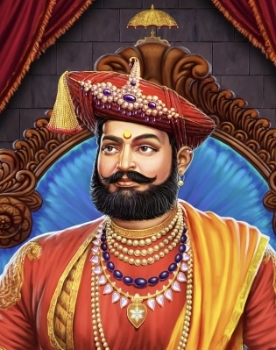
Yashwant Rao Holkar: A Legacy of Leadership and Vision


Yashwantrao Holkar, also known as Yashwantrao Puar, was a prominent figure in Indian history, particularly during the 18th century. He was a Maratha ruler who played a significant role in the politics and warfare of his time. Yashwantrao Holkar belonged to the Holkar dynasty, a powerful Maratha clan that rose to prominence in central India.

Yashwantrao Holkar was born in 1776 as the son of Khanderao Holkar, who was the ruler of the Holkar principality at the time. Yashwantrao was known for his military skills and leadership abilities from a young age. He was actively involved in the affairs of the Holkar state and played a crucial role in expanding its territories and influence.

The Holkar dynasty has its origins in the Malwa region of present-day Madhya Pradesh. The founder of the dynasty, Malhar Rao Holkar, was a general in the Maratha Empire who established the Holkar principality in the late 18th century. Under his leadership, the Holkars emerged as one of the most influential Maratha clans in central India.

One of the defining moments of Yashwantrao Holkar's life was his confrontation with the British East India Company during the Second Anglo-Maratha War. The war, which took place between 1803 and 1805, was a significant conflict that shaped the course of Indian history. Yashwantrao Holkar led the Maratha forces against the British in a series of battles, including the Battle of Poona and the Battle of Assaye.

Despite facing formidable opponents, Yashwantrao Holkar demonstrated strategic acumen and resolute determination in his resistance against the British forces. His military tactics and leadership skills earned him a reputation as a formidable warrior and a symbol of Maratha resistance to British imperialism.

Yashwantrao Holkar's legacy extends beyond his military exploits. He was also known for his administrative reforms and efforts to modernize the Holkar state. He implemented policies aimed at promoting agriculture, trade, and industry, which contributed to the economic development of his kingdom.

Furthermore, Yashwantrao Holkar was a patron of art, culture, and literature. He supported talented artists, musicians, and scholars, fostering a vibrant cultural environment in the Holkar principality. His court became a center of intellectual exchange and creative expression, attracting artists and thinkers from across India.

Yashwantrao Holkar's reign came to an end with his death in 1811. However, his legacy continued to inspire generations of Indians who revered him as a heroic figure and a symbol of Maratha pride. His contributions to Indian history, both in the military and administrative spheres, have left a lasting impact on the nation's collective memory.

In conclusion, Yashwantrao Holkar was a visionary leader, a courageous warrior, and a patron of arts and culture. His life and achievements exemplify the rich history and heritage of the Maratha people. As a pivotal figure in Indian history, Yashwantrao Holkar's legacy continues to be remembered and honored by those who appreciate his contributions to the nation.


Tuesday, 2 July 2024

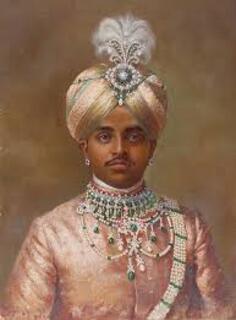
"Enlightenment and Progress: Krishnaraja Wodeyar III of Mysore"


Krishnaraja Wadiyar III, also known as Mummadi Krishnaraja Wadiyar, was one of the most prominent rulers of the Kingdom of Mysore in southern India during the early 19th century. His reign, which lasted from 1799 to 1868, was a significant period in the history of the region, marked by political upheaval, social reform, and cultural advancement.

Krishnaraja Wadiyar III belonged to the Wadiyar dynasty, which had been ruling the Kingdom of Mysore since the late 14th century. The dynasty had its origins in the Yadu dynasty of Gujarat and rose to power under the leadership of Yaduraya Wadiyar in the early 17th century. Over the centuries, the Wadiyars established themselves as strong and capable rulers, known for their administration, military prowess, and patronage of the arts and culture.

Krishnaraja Wadiyar III ascended to the throne in 1799 at a time of great turmoil in Mysore. The kingdom had been embroiled in conflicts with the British East India Company and the Maratha Empire, leading to the defeat and death of Tipu Sultan, the previous ruler of Mysore, in the Fourth Anglo-Mysore War. Under Krishnaraja Wadiyar III's rule, Mysore entered into a subsidiary alliance with the British, which allowed the kingdom to maintain its autonomy while acknowledging British suzerainty.

One of the key aspects of Krishnaraja Wadiyar III's reign was his focus on administrative reforms and modernization. He introduced new systems of revenue collection, land tenure, and justice administration, which helped to improve governance and promote economic development in the kingdom. Krishnaraja Wadiyar III also undertook measures to promote education and social welfare, including the establishment of schools, colleges, and hospitals.

In addition to his administrative and social reforms, Krishnaraja Wadiyar III was a great patron of the arts and culture. He supported the development of literature, music, dance, and other forms of creative expression, leading to a flourishing of artistic talent in Mysore during his reign. Krishnaraja Wadiyar III himself was known for his appreciation of the arts, and he encouraged artists and scholars to thrive in his kingdom.

Krishnaraja Wadiyar III's reign also saw the construction of several notable architectural landmarks in Mysore, including the Lalitha Mahal Palace, the Jaganmohan Palace, and the Mysore Palace. These buildings, known for their exquisite craftsmanship and grandeur, stand as a testament to the Wadiyar dynasty's legacy of architectural patronage.

Overall, Krishnaraja Wadiyar III's reign was a period of significant transformation and progress for the Kingdom of Mysore. His contributions to administration, social welfare, and culture left a lasting impact on the region, shaping its history and identity for generations to come. Krishnaraja Wadiyar III's legacy as a visionary ruler and a patron of the arts continues to be celebrated and remembered in Mysore and beyond.


Friday, 28 June 2024

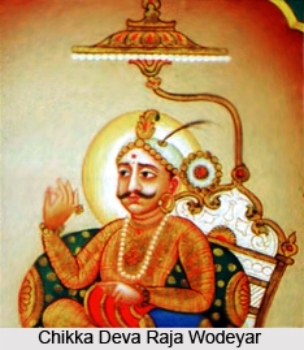
Chikka Deva Raja Wodeyar: A Stalwart of the Wodeyar Dynasty


Chikka Deva Raja Wodeyar, a prominent figure in the history of the Wodeyar dynasty of Mysore, India, was a ruler known for his valor, benevolence, and administrative acumen. Born in 1673, Chikka Deva Raja ascended to the throne of Mysore in 1673, succeeding his father, Kanthirava Narasaraja I. His reign marked a period of stability and prosperity for the kingdom, characterized by significant contributions to infrastructure, culture, and governance.

The Wodeyar dynasty, one of the oldest royal families in India, traces its lineage back to Yaduraya Wodeyar, who established the kingdom of Mysore in the 14th century. Chikka Deva Raja Wodeyar belonged to the 12th generation of rulers in the dynasty and inherited a rich legacy of leadership and statesmanship. His reign, spanning from 1673 to 1704, was a period of consolidation and growth for the kingdom of Mysore.

Chikka Deva Raja Wodeyar was renowned for his military prowess and strategic acumen. He successfully defended the kingdom of Mysore against external threats and expanded its territories through strategic alliances and diplomatic maneuvers. His military campaigns were marked by valor and chivalry, earning him a reputation as a formidable warrior and a skilled tactician.

In addition to his military achievements, Chikka Deva Raja Wodeyar was also a patron of the arts and culture. He supported scholars, poets, and artists, fostering a vibrant cultural environment in his kingdom. Under his patronage, Mysore witnessed a flourishing of literature, music, and dance, with the royal court serving as a center of intellectual and artistic activity.

One of Chikka Deva Raja Wodeyar's enduring legacies is his contribution to the development of infrastructure in Mysore. He undertook several ambitious projects to improve the kingdom's irrigation systems, roads, and public amenities, enhancing the quality of life for his subjects. His efforts to promote agriculture, trade, and commerce laid the foundation for Mysore's economic prosperity and growth.

Chikka Deva Raja Wodeyar was also known for his progressive policies and benevolent rule. He introduced reforms to promote social welfare, religious tolerance, and justice, earning the admiration and respect of his subjects. His emphasis on good governance, fairness, and equitable distribution of resources contributed to the overall well-being of the kingdom and fostered a sense of unity and harmony among its diverse populace.

Chikka Deva Raja Wodeyar's legacy endures as a testament to the enduring influence of the Wodeyar dynasty in shaping the history and culture of Mysore. His contributions to military strategy, governance, culture, and infrastructure have left an indelible mark on the kingdom's heritage and identity. Chikka Deva Raja's reign is remembered as a period of prosperity, progress, and peace, characterized by his visionary leadership and commitment to the welfare of his subjects.

In conclusion, Chikka Deva Raja Wodeyar stands out as a stalwart of the Wodeyar dynasty and a pivotal figure in the history of Mysore. His reign, marked by military triumphs, cultural patronage, and administrative reforms, exemplifies the values of courage, compassion, and foresight that define a great ruler. Chikka Deva Raja's enduring legacy serves as a source of inspiration and pride for the people of Mysore, honoring his memory as a revered leader and statesman.