Showing posts with label empire. Show all posts

Sunday, 7 December 2025

Ala-ud-din Khilji: Warrior, Administrator, and Builder of Delhi’s Glory

Introduction

Ala-ud-din Khilji, originally named Ali Gurshasp, stands out as one of the most formidable rulers in the annals of medieval India. Ascending the throne of the Delhi Sultanate in 1296 CE after the assassination of his uncle and father-in-law, Jalal-ud-din Khilji, Ala-ud-din reigned until 1316 CE. His rule marked a decisive turning point in Indian history, characterized by military brilliance, sweeping administrative reforms, and an extraordinary ability to repel repeated Mongol invasions. Though ruthless in consolidating power, he is remembered as a visionary monarch who reshaped the socio-political and economic foundations of the Sultanate, leaving behind a legacy that endured long after his death.

Expansion of the Khilji Empire

Under Ala-ud-din Leadership, the Delhi Sultanate reached its zenith in territorial expansion. His dominion stretched from the Himalayas in the north to the Deccan plateau in the south, and from Gujarat in the west to Bengal in the east. Rajput strongholds were subdued, Gujarat and Malwa annexed, and his trusted general Malik Kafur spearheaded campaigns deep into the Deccan. These expeditions brought Devagiri, Warangal, Dwarasamudra, and Madurai under the Sultanate’s influence. The vastness of the empire was matched by its administrative efficiency, ensuring prosperity and stability across diverse regions.

The Nature of His Rule

Ala-ud-din’s reign lasted two decades, during which he consolidated authority with an iron hand. His governance was marked by strict discipline, centralization of power, and suppression of rebellions. Merciless toward opponents yet pragmatic in administration, he combined severity with foresight. His rule is remembered not only for territorial conquests but also for reforms that transformed the economic and social structures of medieval India. By curbing the influence of nobles and strengthening central authority, he ensured resilience against both internal dissent and external threats.

Political and Social Policies

Determined to prevent conspiracies and maintain loyalty, Ala-ud-din introduced policies that curtailed the privileges of nobles. He abolished the practice of granting land to aristocrats, restricted their social gatherings, and prohibited marriages without state approval. These measures reduced the chances of rebellion and reinforced the Sultan’s supremacy. His policies reflected a keen understanding of the political dynamics of the time, ensuring that the Sultanate remained unified under his command.

Economic Reforms

Ala-ud-din’s economic policies were revolutionary for their time. He introduced market regulations to stabilize the prices of essential commodities such as grain, cloth, and horses. State granaries were established, and trade was closely monitored by appointed officials. Merchants were required to register, and violations were met with severe punishments. These reforms ensured affordable supplies for both the army and the general population. By controlling inflation and securing resources, Ala-ud-din strengthened the economic foundation of the Sultanate while maintaining military readiness.

Revenue System

The Sultan reorganized the revenue system to maximize state control over agrarian resources. Land revenue was collected directly from peasants, fixed at 50% of the produce a heavy burden but one that filled the treasury. Detailed land surveys were conducted to assess productivity, and revenue officials were appointed to minimize corruption. This system reduced the power of intermediaries and enhanced the Sultan’s authority over rural economies. Though harsh, it provided the financial backbone for his ambitious military and administrative programs.

Military Administration

Ala-ud-din maintained one of the strongest standing armies of his era. To ensure discipline and prevent corruption, he introduced reforms such as branding horses (dagh) and maintaining descriptive rolls of soldiers (chehra). Soldiers were paid in cash rather than land grants, ensuring their loyalty to the Sultan rather than to local landlords. These measures created a professional and efficient military force, capable of defending the empire and expanding its frontiers. His military administration became a model of centralized control and organization.

Mongol Threat and Resistance

The Mongols posed a formidable challenge to the Delhi Sultanate, launching repeated invasions between 1297 and 1308. Ala-ud-din’s military genius enabled him to repel these attacks successfully. His victory at the Battle of Jaran-Manjur in 1297 and subsequent campaigns safeguarded Delhi from foreign domination. Few rulers in Asia managed to resist the Mongols as effectively as Ala-ud-din, and his success in defending India against their incursions remains one of his most enduring achievements.

Conquests and Wealth

Ala-ud-din’s conquests were extensive and lucrative. Gujarat fell in 1299, Ranthambore in 1301, and Malwa in 1305. Malik Kafur’s southern campaigns brought immense wealth to The Sultanate, including the famed Koh-i-Noor diamond. These victories not only expanded the empire but also demonstrated the military superiority of the Khilji dynasty. The influx of wealth from these campaigns strengthened the Sultanate’s economy and funded further reforms, cementing Ala-ud-din’s reputation as both a conqueror and administrator.

Tomb and Architectural Legacy

Ala-ud-din Khilji died in 1316 and was buried near the Qutb Minar complex in Delhi. His tomb, adjacent to the madrasa he established, is modest compared to other royal mausoleums. Built of rubble masonry, it is square in plan with arched entrances and a dome, reflecting the architectural style of the period. The adjoining madrasa was among the earliest Islamic educational institutions in India, symbolizing his commitment to learning and culture. The simplicity of the tomb contrasts with the grandeur of his reign, offering insight into the architectural trends of the Khilji era.

Madrasa-Tomb Complex

The madrasa-tomb complex of Ala-ud-din Khilji represents a fusion of religious and educational functions. The madrasa served as a center of Islamic scholarship, while the tomb commemorated the Sultan’s legacy. This combination became a model for later rulers, blending spirituality, education, and remembrance. It highlights Ala-ud-din’s cultural contributions beyond his military and administrative achievements, underscoring his role in shaping the intellectual landscape of medieval India.

Conclusion

Ala-ud-din Khilji was more than a conqueror; he was a visionary ruler whose reforms left a lasting imprint on Indian history. His reign strengthened the Delhi Sultanate, expanded its boundaries, and introduced policies that influenced society for centuries. His resistance against the Mongols preserved India’s independence from foreign domination, while his economic and military measures ensured stability and prosperity. Though his tomb is modest, his legacy endures as one of the greatest rulers of medieval India an empire-builder, reformer, and defender of the realm.


Monday, 25 August 2025

Achievement of Kanishka: A Pillar of Ancient Indian Civilization

Introduction

Kanishka I, often hailed as Kanishka the Great, was a towering figure in ancient Indian history and a transformative ruler of the Kushana Empire. His reign, estimated to have begun around the 2nd century CE, marked a golden age of political expansion, religious transformation, and cultural renaissance. A descendant of Kujula Kadphises, the founder of the Kushana dynasty, Kanishka inherited a burgeoning empire and elevated it to unprecedented heights. His rule extended from Central Asia to the Gangetic plains, encompassing key cities like Pataliputra, Mathura, and Purusapura (modern-day Peshawar). The discovery of coins bearing his image in Tripuri (Jabalpur) further attests to the vastness of his influence.

Kanishka’s Conquests and Political Achievements

Kanishka was a formidable military strategist. His campaigns expanded the Kushana Empire deep into northern India and Central Asia. He successfully annexed regions such as Kashmir, Punjab, and parts of Bactria, creating a transcontinental empire that facilitated trade and cultural exchange between East and West.

  • He maintained dual capitals Purusapura and Mathura strategically positioned to govern both the western and eastern parts of his empire.
  • His administration was marked by efficient governance, with a well-organized bureaucracy and coinage system.
  • Kanishka’s coins, minted in gold and copper, bore inscriptions in Greek, Bactrian, and Kharosthi, reflecting the cosmopolitan nature of his empire.

Economic Achievements of Kanishka

Kanishka’s reign saw remarkable economic prosperity, largely fuelled by trade along the Silk Road. His empire became a vital link between Rome, Persia, China, and India.

  • Trade in silk, spices, gemstones, and textiles flourished under his patronage.
  • The Kushana coinage system, standardized and widely accepted, facilitated commerce across vast territories.
  • Urban centers like Mathura and Purusapura became bustling hubs of trade, craftsmanship, and cultural activity.

This economic boom not only enriched the empire but also laid the foundation for cultural and religious exchanges that defined the era.

Achievements of Kanishka with Buddhism

Kanishka’s most enduring legacy lies in his patronage of Buddhism. Though initially a follower of Hindu deities as evidenced by early coinage he later embraced Mahayana Buddhism, profoundly influencing its spread and development.

  • He supported Buddhist scholars, monks, and artists, turning his empire into a sanctuary for Buddhist thought.
  • Under his rule, Buddhist monasteries flourished, and stupas were constructed across the empire.
  • Kanishka played a pivotal role in the transition from Hinayana to Mahayana Buddhism, which emphasized the divine nature of the Buddha and the concept of Bodhisattvas.

Religious Policy of Kanishka

Kanishka’s religious policy was marked by tolerance and pluralism. His coinage featured a pantheon of deities from various traditions Greek, Zoroastrian, Hindu, and Buddhist demonstrating his inclusive approach.

  • He did not impose a state religion but rather encouraged spiritual diversity.
  • His support for Buddhism did not come at the expense of other faiths; temples and shrines of multiple religions thrived under his rule.
  • This syncretic environment fostered philosophical dialogues and artistic fusion across traditions.

Fourth Buddhist Council Under Kanishka’s Rule

One of Kanishka’s most significant contributions to Buddhism was convening the Fourth Buddhist Council in Kashmir, around 100 CE.

  • The council aimed to compile and codify Buddhist scriptures, particularly those of the Mahayana tradition.
  • It brought together scholars from across Asia, including the renowned Buddhist philosopher Vasumitra and the Sanskrit grammarian Ashvaghosha.
  • The council’s outcomes helped standardize Buddhist teachings and facilitated their transmission to Central Asia and China.

This council is considered a landmark event in Buddhist History, shaping the religion’s doctrinal and literary foundations.

Buddhism During Kanishka’s Rule

Under Kanishka, Buddhism experienced a renaissance. His patronage led to the construction of monumental stupas, such as the Kanishka Stupa in Peshawar, which was said to be one of the tallest structures of its time.

  • Buddhist art flourished, especially in the Gandhara and Mathura schools, blending Hellenistic and Indian styles.
  • Monasteries became centers of learning, attracting pilgrims and scholars from distant lands.
  • The spread of Mahayana Buddhism to China and beyond was catalysed by the cultural exchanges enabled by Kanishka’s empire.

Kanishka’s Reign as Indian Renaissance

Kanishka’s era is often likened to a renaissance in Indian history a period of intellectual, artistic, and spiritual awakening.

  • His court welcomed poets, philosophers, and scientists, fostering a vibrant intellectual climate.
  • Sanskrit literature gained prominence, with figures like Ashvaghosha composing epic works such as Buddhacharita.
  • The fusion of Greek, Persian, and Indian elements created a unique cultural tapestry that enriched the subcontinent.

Art and Architecture Under Kanishka

Kanishka’s patronage of art and architecture left an indelible mark on Indian and Central Asian heritage.

  • The Gandhara school of art, which flourished under his rule, depicted the Buddha in human form with Greco-Roman stylistic influences.
  • The Mathura school emphasized indigenous Indian aesthetics, portraying deities with robust, expressive features.
  • Monumental structures like stupas, monasteries, and sculptures were commissioned across the empire, many of which survive today as archaeological treasures.

Conclusion

Kanishka the Great was more than a conqueror he was a visionary who shaped the spiritual and cultural contours of ancient India. His achievements in governance, economy, religion, and the arts laid the groundwork for a flourishing civilization that resonated far beyond his empire’s borders. Through his patronage of Buddhism and promotion of cultural synthesis, Kanishka’s legacy continues to inspire scholars and spiritual seekers alike. His reign stands as a testament to the power of enlightened leadership in forging a golden age of progress and harmony.


Friday, 2 August 2024

Monasteries in East India: A Cultural and Spiritual Exploration


East India, a region rich in diverse cultures and traditions, is home to several monasteries that are central to the spiritual and historical tapestry of the area. Buddhist monasteries and pilgrimage sites are important centers of Buddhism, a religion highly prevalent and practiced in eastern India since ancient times. These monasteries not only serve as places of worship but also as custodians of ancient Buddhist heritage.


Prominent Monasteries in East India


1. Tawang Monastery: Located in Arunachal Pradesh, Tawang Monastery is one of the largest and most significant Buddhist monasteries in India. Established in the early 17th century by the Fifth Dalai Lama, it is a major center for the Gelugpa sect of Tibetan Buddhism. Perched at an altitude of 3,048 meters, it offers breathtaking views of the surrounding mountains. The monastery houses a vast collection of ancient manuscripts, thangkas, and a massive statue of the Buddha, making it a vital center for Buddhist learning and practice.


2. Namdroling Monastery: Situated in Bylakuppe, Karnataka, this monastery is a prominent center for the Nyingma sect of Tibetan Buddhism. Although not in East India geographically, its influence extends throughout the region. Founded in 1963, Namdroling Monastery is renowned for its beautiful architecture, including the grand Golden Temple, and its vibrant community of monks. It plays a crucial role in preserving Tibetan Buddhist traditions and offers a range of teachings and cultural programs.


3. Karmapa Monastery: Located in the town of Kalimpong, West Bengal, the Karmapa Monastery is an important center for the Kagyu school of Tibetan Buddhism. Founded in the 1960s, it serves as the seat of the Karmapa, one of the most revered figures in Tibetan Buddhism. The monastery's beautiful surroundings and its role in maintaining Tibetan Buddhist practices make it a significant pilgrimage site.


4. Ralang Monastery: Nestled in Sikkim, Ralang Monastery is a prominent site for the Karma Kagyu lineage of Tibetan Buddhism. Established in the 19th century, it features intricate murals and statues, and plays a key role in the religious life of the region. Its serene environment and historical significance draw both pilgrims and tourists.


Cultural and Spiritual Impact


These monasteries are more than just places of worship; they are vital centers for the preservation and dissemination of Buddhist teachings and culture. They offer insight into the rich spiritual traditions of East India and provide peaceful retreats for meditation and reflection. The art, rituals, and architecture found in these monasteries reflect the deep cultural heritage of Buddhism in the region, making them essential destinations for those seeking spiritual and cultural enrichment.

Tuesday, 23 July 2024

Shivaji II: A Historical Overview of His Reign and Legacy


Shivaji II, also known as Chhatrapati Shivaji II, was a notable figure in the history of India, particularly in the context of the Maratha Empire during the 19th century. His reign, though relatively brief, played a significant role in the political landscape of Maharashtra and the broader region. This article explores the history, origins, and legacy of Shivaji II, shedding light on his contributions and the impact of his rule.

Shivaji II was born on June 17, 1830, as the son of Shahaji II of the Bhonsle dynasty, which claimed descent from the legendary Maratha warrior king, Chhatrapati Shivaji Maharaj. The Bhonsle dynasty had a rich lineage intertwined with the Maratha Empire's history, known for its contributions to Maratha politics and governance.

Shivaji II ascended to the throne of the Maratha Empire in 1837, following the death of his father, Shahaji II. His accession occurred during a tumultuous period characterized by political instability and challenges from various factions vying for influence in Maharashtra. Despite being young at the time of his ascension, Shivaji II's lineage and claim to the Bhonsle legacy provided him with legitimacy among Maratha nobles and the broader population.

During his reign, Shivaji II faced numerous challenges, including the British East India Company's expanding influence in India. The British had established themselves as paramount rulers in many parts of the subcontinent, and Maharashtra was no exception. Shivaji II's rule unfolded against a backdrop of negotiations and conflicts with the British, as he navigated the complexities of maintaining autonomy while acknowledging British suzerainty.

Despite these challenges, Shivaji II made efforts to modernize and strengthen his administration. He supported initiatives in education, infrastructure development, and social reforms within his realm, aiming to improve the welfare of his subjects and bolster the Maratha Empire's resilience.

Shivaji II's legacy lies in his role as a custodian of Maratha traditions and as a symbol of resistance against colonial encroachments. His reign marked a transitional phase in Maratha history, where traditional Maratha power structures intersected with emerging British dominance.

Furthermore, Shivaji II's patronage of cultural and educational initiatives contributed to the preservation and promotion of Marathi language and culture. His support for local institutions and reforms laid the groundwork for Maharashtra's socio-cultural resurgence in subsequent decades.

In conclusion, Shivaji II's reign as Chhatrapati of the Maratha Empire represents a pivotal chapter in the history of Maharashtra and India. Born into a lineage steeped in valor and governance, Shivaji II navigated the challenges of his time with a commitment to his people and the preservation of Maratha heritage. His efforts to navigate the shifting political landscape and his contributions to cultural and educational reforms continue to resonate in Maharashtra's collective memory. Shivaji II remains an enduring figure in Indian history, remembered for his leadership, resilience, and dedication to the Maratha cause during an era of profound change and transition.


Saturday, 20 July 2024

The Princes of Patiala: A Glimpse into History and Heritage


The princely state of Patiala, located in the northern Indian state of Punjab, is steeped in a rich history marked by a blend of tradition, culture, and significant political influence. The lineage of Patiala's rulers, known as the Phulkian dynasty, traces its origins to the late 17th century.

Patiala was established in 1763 by Baba Ala Singh, a military commander and leader of the Sikhs. He sought to create a separate entity for the Sikhs amidst the political turmoil following the decline of the Mughal Empire. Initially, Patiala was a small town, but under Ala Singh's leadership, it began to flourish. He was recognized for his administrative skills and military acumen, which helped him consolidate power and expand the territory. Patiala became a key stronghold for the Sikhs and an essential center for commerce and culture.

The peak of the Patiala dynasty occurred under the rule of Maharaja Amar Singh, who ascended the throne in the early 19th century. His reign marked significant socio-economic development as well as cultural patronage. Amar Singh emphasized modernization, leading to improvements in infrastructure, education, and health facilities. His progressive policies laid the groundwork for Patiala to emerge as an influential princely state in Punjab.

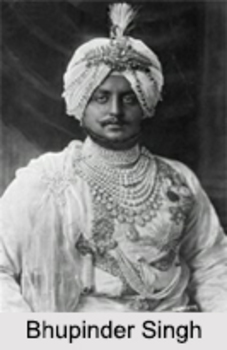
Maharaja Adhiraj Bhupinder Singh, who ruled from 1900 to 1938, is perhaps the most renowned ruler of Patiala. An influential figure in the British-Indian landscape, Bhupinder Singh was known for his extravagant lifestyle and cultural contributions. He established the Patiala State, a prominent and prosperous entity in British India, and had a significant influence on Sikh identity. He was an avid sports enthusiast, actively promoting athletics and ensuring that Patiala was home to significant sporting events.

During British rule, the princes of Patiala had a crucial role in the political landscape. They maintained a delicate balance between loyalty to the British and the aspirations of the Indian independence movement. Bhupinder Singh, for instance, was a member of the Viceroy's Executive Council, providing him a platform to influence decisions at the national level. However, his relationship with the British also drew criticism during the growing wave of nationalism in India.

Post-independence, the princely states were integrated into the Indian Union. The last Maharaja of Patiala, Adhiraj Capt. Amarinder Singh, willingly ceded his rule and participated in the democratic process, further solidifying his family's legacy in the region. The political clout of the Patiala royal family transitioned from princely power to active participation in Indian politics, with members of the family continuing to play significant roles in state governance.

The rulers of Patiala significantly impacted Punjabi culture, art, and architecture. They were the patrons of music, literature, and fine arts. The Qila Mubarak, the magnificent palace complex in Patiala, stands as a testament to their architectural achievements. The rich traditions of Punjabi music, especially the Patiala Gharana of classical music, owe much to the royal family's encouragement of cultural activities.

In contemporary Punjab, the legacy of the Patiala royals continues to endure, influencing not only local culture but also the Indian political spectrum. The story of the princes of Patiala is one of resilience, adapting to changing times while preserving the rich traditions of their heritage. The Phulkian dynasty remains an emblem of pride for many Punjabis, representing an era of splendor and cultural richness that shaped the historical narrative of the region.


Friday, 19 July 2024

The Legacy of Sriranga Deva Raya I: A Great Vijayanagara Emperor


Sriranga Deva Raya I, also known as Raya Rama, was a prominent ruler of the Vijayanagara Empire in South India. His reign, which lasted from 1572 to 1586, was marked by military conquests, political stability, and cultural patronage. Sriranga Deva Raya I is remembered as one of the most successful and influential emperors of the Vijayanagara Empire, leaving behind a lasting legacy that shaped the region for years to come.

Sriranga Deva Raya I was born in 1516 as the son of Achyuta Deva Raya, the ruler of the Vijayanagara Empire. He was the grandson of the legendary emperor Krishnadevaraya, under whose rule the empire reached its zenith. Sriranga Deva Raya I grew up in the midst of the opulence and grandeur of the Vijayanagara court, imbibing the values of leadership, benevolence, and valor from a young age.

After the death of his father, Sriranga Deva Raya I ascended the throne in 1572. His reign began during a turbulent period in South India, with threats from neighboring kingdoms and internal strife challenging the stability of the Vijayanagara Empire. Sriranga Deva Raya I wasted no time in consolidating his power and asserting his authority over the region.

One of Sriranga Deva Raya I's most significant military campaigns was against the Deccan Sultanates, particularly the Adil Shahi Sultanate and the Qutb Shahi Sultanate. He successfully defeated these powerful adversaries and expanded the boundaries of the Vijayanagara Empire to encompass vast territories in present-day Karnataka, Andhra Pradesh, and Tamil Nadu.

Sriranga Deva Raya I was also known for his naval prowess, which he demonstrated in his confrontations with the Portuguese colonizers along the western coast of India. By bolstering the Vijayanagara naval fleet and establishing strategic alliances with other coastal kingdoms, Sriranga Deva Raya I was able to safeguard his empire's maritime interests and prevent incursions from foreign powers.

In addition to his military achievements, Sriranga Deva Raya I was a great patron of the arts and literature. During his reign, the Vijayanagara Empire witnessed a flourishing of cultural activities, with poets, scholars, and artists finding favor and support at the royal court. Sriranga Deva Raya I's patronage extended to temples and religious institutions as well, with many architectural wonders and religious edifices commissioned under his rule.

Sriranga Deva Raya I's legacy as a benevolent and visionary ruler endures to this day. He is remembered for his administrative acumen, military valor, and cultural contributions that enriched the fabric of South Indian society. The reign of Sriranga Deva Raya I exemplifies the heights to which the Vijayanagara Empire rose under strong and enlightened leadership, leaving an indelible mark on the history of the region.

In conclusion, Sriranga Deva Raya I remains a towering figure in the annals of South Indian history, revered for his accomplishments as a warrior, statesman, and patron of the arts. His legacy serves as a testament to the enduring power of leadership and vision in shaping the destinies of empires and civilizations.


Wednesday, 17 July 2024

Virarajendra Chola I: Architect of Chola Resurgence


Virarajendra Chola I, also known as the Kalari-Vira, was a renowned ruler of the Chola dynasty who reigned during the 11th century CE. His leadership and military prowess played a pivotal role in shaping the history of the Chola Empire, making him a legendary figure in ancient South Indian history.

Born into the illustrious Chola lineage, Virarajendra Chola I inherited a legacy of power and conquest. He ascended to the throne in 1063 CE, following the death of his father, Rajendra Chola II. Despite facing internal strife and external threats, Virarajendra proved himself to be a formidable warrior king who successfully defended the Chola Empire and expanded its territories through a series of military campaigns.

One of the most significant events during Virarajendra Chola I's reign was his successful military expedition against the Chalukyas of Kalyani. The Chalukyas, who were powerful rivals of the Cholas, posed a threat to Chola dominance in the region. However, Virarajendra's strategic military planning and decisive leadership led to the defeat of the Chalukyas, solidifying Chola control over the Deccan region and establishing the Cholas as the preeminent power in South India.

Virarajendra Chola I's military campaigns were not limited to the Deccan region. He also led successful expeditions into the Pandya territories in southern Tamil Nadu, further expanding Chola influence and asserting dominance over rival kingdoms. His military achievements earned him the title of Kalari-Vira, or "the Brave in the Field," highlighting his reputation as a fearless and skilled warrior king.

In addition to his military conquests, Virarajendra Chola I was known for his administrative acumen and patronage of the arts. He supported the construction of magnificent temples, such as the Airavatesvara Temple in Darasuram, which stands as a testament to the Chola dynasty's architectural and artistic achievements. Virarajendra's patronage of the arts and culture contributed to the flourishing of literature, music, and dance during his reign.

Despite his military successes and cultural contributions, Virarajendra Chola I faced internal challenges within the Chola Empire. Revolts and uprisings among regional governors and nobles posed a threat to his authority, requiring him to navigate complex political situations and maintain stability within his realm. However, Virarajendra's resilience and leadership skills enabled him to overcome these challenges and uphold Chola power and prestige.

The reign of Virarajendra Chola I marked a period of both military conquests and cultural achievements for the Chola Empire. His legacy as a warrior king and patron of the arts endures through the numerous inscriptions, temples, and artworks that bear witness to his rule. Virarajendra's contributions to the Chola dynasty and South Indian history continue to be celebrated and studied as a testament to his enduring legacy as a resilient and visionary ruler.


Wednesday, 3 July 2024

Maharaja Rajendra Chola I: Architect of a Maritime Empire


Maharaja Rajendra Chola I is renowned as one of the greatest rulers of the Chola dynasty, a powerful empire that dominated South India and Southeast Asia during the medieval period. His reign, which lasted from 1014 to 1044 AD, marked a golden era in the history of the Chola empire, characterized by territorial expansion, military conquests, and cultural achievements.

Rajendra Chola I was born in the illustrious Chola royal family as the son of Rajaraja Chola I, the founder of the Chola dynasty's imperial expansion. Rajendra Chola inherited a strong and prosperous empire from his father and continued to build upon his legacy, expanding the Chola territories to new heights of power and influence.

One of the most significant achievements of Maharaja Rajendra Chola I was his military prowess and successful conquests. He inherited a well-trained and disciplined army from his father and further strengthened it by conducting strategic military campaigns across South India and beyond. Rajendra Chola's military expeditions resulted in the annexation of new territories, including regions in present-day Sri Lanka, Southeast Asia, and the Maldives.

Under Rajendra Chola's rule, the Chola empire reached its zenith in terms of territorial expansion and political influence. His military campaigns not only extended the Chola empire's borders but also established Chola dominance in the Indian Ocean trade routes, facilitating maritime trade and commerce with distant lands.

In addition to his military conquests, Maharaja Rajendra Chola I was also a patron of art, architecture, and literature. During his reign, the Chola empire witnessed a flourishing of art and culture, with the construction of grand temples, palaces, and monuments that reflected the Chola's architectural and artistic excellence. The Brihadeeswarar Temple in Thanjavur, built by Rajendra Chola's father, stands as a testament to the Chola empire's architectural achievements.

Rajendra Chola's patronage of literature and education also contributed to the intellectual and cultural growth of the Chola dynasty. Sanskrit and Tamil literature thrived under his reign, with scholars and poets receiving royal support and encouragement.

The legacy of Maharaja Rajendra Chola I as a great warrior king and a patron of art and culture continues to be celebrated in South India and beyond. His contributions to the expansion of the Chola empire, his military achievements, and his cultural patronage have earned him a place of honor in the annals of Indian history.

In conclusion, Maharaja Rajendra Chola I stands out as a towering figure in the history of the Chola dynasty and Indian medieval history. His leadership, military exploits, and cultural patronage have left an indelible mark on the legacy of the Chola empire, highlighting the grandeur and splendor of one of the most illustrious dynasties in Indian history.


Friday, 28 June 2024

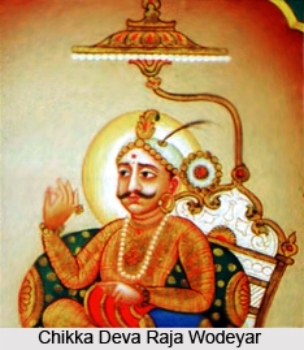
Chikka Deva Raja Wodeyar: A Stalwart of the Wodeyar Dynasty


Chikka Deva Raja Wodeyar, a prominent figure in the history of the Wodeyar dynasty of Mysore, India, was a ruler known for his valor, benevolence, and administrative acumen. Born in 1673, Chikka Deva Raja ascended to the throne of Mysore in 1673, succeeding his father, Kanthirava Narasaraja I. His reign marked a period of stability and prosperity for the kingdom, characterized by significant contributions to infrastructure, culture, and governance.

The Wodeyar dynasty, one of the oldest royal families in India, traces its lineage back to Yaduraya Wodeyar, who established the kingdom of Mysore in the 14th century. Chikka Deva Raja Wodeyar belonged to the 12th generation of rulers in the dynasty and inherited a rich legacy of leadership and statesmanship. His reign, spanning from 1673 to 1704, was a period of consolidation and growth for the kingdom of Mysore.

Chikka Deva Raja Wodeyar was renowned for his military prowess and strategic acumen. He successfully defended the kingdom of Mysore against external threats and expanded its territories through strategic alliances and diplomatic maneuvers. His military campaigns were marked by valor and chivalry, earning him a reputation as a formidable warrior and a skilled tactician.

In addition to his military achievements, Chikka Deva Raja Wodeyar was also a patron of the arts and culture. He supported scholars, poets, and artists, fostering a vibrant cultural environment in his kingdom. Under his patronage, Mysore witnessed a flourishing of literature, music, and dance, with the royal court serving as a center of intellectual and artistic activity.

One of Chikka Deva Raja Wodeyar's enduring legacies is his contribution to the development of infrastructure in Mysore. He undertook several ambitious projects to improve the kingdom's irrigation systems, roads, and public amenities, enhancing the quality of life for his subjects. His efforts to promote agriculture, trade, and commerce laid the foundation for Mysore's economic prosperity and growth.

Chikka Deva Raja Wodeyar was also known for his progressive policies and benevolent rule. He introduced reforms to promote social welfare, religious tolerance, and justice, earning the admiration and respect of his subjects. His emphasis on good governance, fairness, and equitable distribution of resources contributed to the overall well-being of the kingdom and fostered a sense of unity and harmony among its diverse populace.

Chikka Deva Raja Wodeyar's legacy endures as a testament to the enduring influence of the Wodeyar dynasty in shaping the history and culture of Mysore. His contributions to military strategy, governance, culture, and infrastructure have left an indelible mark on the kingdom's heritage and identity. Chikka Deva Raja's reign is remembered as a period of prosperity, progress, and peace, characterized by his visionary leadership and commitment to the welfare of his subjects.

In conclusion, Chikka Deva Raja Wodeyar stands out as a stalwart of the Wodeyar dynasty and a pivotal figure in the history of Mysore. His reign, marked by military triumphs, cultural patronage, and administrative reforms, exemplifies the values of courage, compassion, and foresight that define a great ruler. Chikka Deva Raja's enduring legacy serves as a source of inspiration and pride for the people of Mysore, honoring his memory as a revered leader and statesman.