Monday, 10 June 2024

Exploring the Rich Heritage and Uses of Ajwain:


“Ajwain,” also known as carom seeds, is a popular spice in Indian cuisine with a strong, distinctive flavor. The most popular variety of ajwain in India is known for its numerous uses in both cooking and traditional medicine. Originating from the Mediterranean region, it found its way to India centuries ago and has since become an indispensable spice in Indian kitchens.

Ajwain is an annual herbaceous plant bearing the greyish- brown fruits [seeds], which constitute the spice. The plant is grown in Iran, Egypt, Afghanistan and chiefly in India, largely in Uttar Pradesh, Bihar, Madhya Pradesh, Punjab, Rajasthan, West Bengal, Tamil Nadu and Andhra Pradesh etc.

Ajwain seeds are commonly used to add a unique flavor to various Indian dishes, especially in bread, lentil dishes, and vegetable curries. Additionally, ajwain is valued for its digestive properties and is often consumed after meals to aid in digestion and provide relief from stomach-related issues.

The history of ajwain dates back centuries, with mentions of the spice in ancient Ayurvedic texts for its medicinal properties. It is believed to have originated in the eastern Mediterranean region and gradually made its way to the Indian subcontinent, where it became an integral part of Indian culinary traditions.

In Ayurvedic medicine, ajwain is highly valued for its digestive properties. It is believed to stimulate digestion, reduce flatulence, and relieve stomach discomfort. Ajwain water, made by soaking the seeds overnight and then straining the liquid, is a popular home remedy for indigestion and acidity.

Thymol, the active compound in ajwain seeds, exhibits strong antimicrobial properties. It can help inhibit the growth of bacteria and fungi, making ajwain a valuable ingredient in natural remedies for various infections and skin conditions.

Ajwain seeds and their essential oil are not only used in traditional medicine but also find applications in the pharmaceutical and cosmetic industries. They are used in the production of herbal supplements, oral care products, and skincare formulations.

There are different types of ajwain available, but the most popular variety in India is known for its bold and robust flavor profile, making it a favorite choice among Indian cooks and households. This variety is characterized by its small, oval-shaped seeds that are light brown in color.

Overall, ajwain is a versatile spice with a rich history and cultural significance in India. Whether used in cooking or for its medicinal properties, this popular variety of ajwain continues to be a staple in Indian kitchens and households across the country.

Exploring the World of Fruit Spices in Indian Cuisine:

Fruit-type spices are a unique category of spices that add a burst of flavor and aroma to dishes, while also providing numerous health benefits. In India, these fruity spices have been used for centuries in traditional cooking and medicine, enhancing the overall taste and nutritional value of various dishes. Fruits Type Spices are actually the dried form of certain fruits which are being used as spice in the Indian Cuisine. Spices derived from berries and fruits of plants are used in very less quantity as it contains very high amount of flavouring agents


Fruit-type spices are versatile ingredients used in both sweet and savory dishes across India. They contribute to curries, desserts, beverages, and even pickles, imparting distinct flavors and aromas. These spices are often used whole or ground to add depth and complexity to dishes, elevating the culinary experience

Cardamom - Known for its sweet and citrusy flavor, cardamom is available in two main types: green cardamom and black cardamom.

Tamarind: Tamarind is a sour fruit commonly used in Indian cooking to add a tangy flavor to dishes. It is often used in chutneys, sauces, and curries, as well as in drinks like refreshing tamarind water.

Cloves - Cloves, the aromatic flower buds of the clove tree, have a warm, sweet, and slightly bitter taste.

·        Kokum: Kokum is a fruit native to the Western Ghats region of India. Its dried outer skin is used as a souring agent in various dishes, particularly in coastal cuisines. Kokum adds a tangy flavor and a beautiful deep red color to curries and drinks. 

       Nutmeg - The seed of the nutmeg tree has a warm, sweet, and nutty flavor and is commonly used in spice blends like garam masala.

·         Kewra (Screw Pine): Kewra is a fragrant fruit commonly used to flavor sweets, desserts, and beverages in Indian cuisine. Its essence is extracted and used in dishes like kheer (rice pudding), biryanis, and syrups.

      In conclusion, fruit-type spices are an integral part of Indian cuisine, adding depth, flavor, and aroma to dishes while also providing numerous health benefits. Cardamom, cloves, cinnamon, and nutmeg are some of the most popular fruit spices in India, each with its own unique uses, ingredients, types, history, and origins. These fruity spices continue to be cherished and celebrated in Indian culinary traditions, enriching both the flavor and nutritional value of dishes across the country.


Friday, 7 June 2024

Sarees of North East India


Sarees hold an irreplaceable significance in Indian culture, reflecting regional diversity and historical legacies. In the northeastern region of India, the saree tradition is deeply rooted in the historical, cultural, and artistic fabric of the communities. Each saree is a labor of love, showcasing the rich cultural tapestry of the northeast through its vibrant colors, intricate patterns, and unique motifs. Let's delve into the captivating history, intricate methods, and diverse types of Sarees from North East India.


The history of sarees in North East India dates back centuries, intertwined with the rich tapestry of indigenous tribes and ethnic groups. These sarees were not merely garments but carriers of tradition, customs, and identity. Over generations, each community has contributed distinct weaving techniques, motifs, and designs to the repertoire of northeastern sarees.

The method of crafting sarees in North East India is a meticulous process, often involving handloom weaving passed down through generations. creating these traditional garments involves a meticulous process that requires skilled artisans to work with various fabrics, dyes, and weaving techniques. Skilled artisans meticulously weave intricate patterns using traditional looms, creating masterpieces that embody cultural narratives and artistic expressions. Natural fibers like silk, cotton, and muga silk are predominantly used, ensuring both durability and elegance.

Types of Sarees:

1. Assamese Mekhela Chador: Originating from Assam, the Mekhela Chador comprises a two-piece attire with intricate motifs adorning the fabric. The motifs often depict elements from nature, reflecting Assam's lush landscapes and vibrant flora.

2. Manipuri Phanek and Innaphi: Manipur's saree tradition is epitomized by the Phanek, a wrap-around cloth worn by Manipuri women, and the Innaphi, a shawl-like garment. These sarees feature vibrant colors and geometric patterns, symbolizing the vibrancy and dynamism of Manipuri culture.

3. Naga Shawls: Among the Naga tribes, intricately woven shawls play a vital role in their cultural attire. These shawls, often made of locally sourced materials, showcase distinctive tribal motifs and patterns, representing the community's social status and identity.

4. Mizo Puon: The Mizo Puon, worn by women in Mizoram, is a traditional attire characterized by vibrant colors and intricate handwoven designs. These sarees are often adorned with traditional motifs that reflect the Mizo people's reverence for nature and their rich cultural heritage.

In conclusion, the Sarees of North East India encapsulate a rich tapestry of history, craftsmanship, and cultural diversity. From the traditional weaving techniques passed down through generations to the modern innovations that continue to push the boundaries of design, these sarees represent a harmonious blend of tradition and creativity Each weave tells a story, preserving age-old traditions while embracing contemporary influences, making them not just garments but embodiments of cultural pride and heritage.


Thursday, 6 June 2024

 Exploring the Aromatic World of Root Type Spices

Root type spices play a crucial role in Indian cuisine, adding depth and flavor to a multitude of dishes. These spices are derived from the roots of plants and are renowned for their unique tastes and aromatic properties. Some of the most popular root type spices in India include ginger, turmeric, and garlic. Root Type Spices are extensively used to make food tasty and delicious.

These spices have a sharp taste and thus make the predominant taste in the dish, yet in a subdued form. These plants mostly grow from thickened aromatic rhizomes with large, upright, alternate leaves. Let's delve into the world of root type spices, focusing on some of the most popular ones in India.


·  Ginger, known as "adrak" in Hindi, is a staple in Indian cooking. Its history dates back thousands of years, with it being used not only for culinary purposes but also for its medicinal properties. Ginger adds a pungent and slightly sweet flavor to dishes, making it a versatile spice used in curries, teas, and desserts.

· Turmeric, or "haldi," is another indispensable root spice deeply entrenched in Indian culture. With origins dating back to ancient India, turmeric has been revered for its vibrant color and medicinal properties. It is a staple in curry powders, imparting a bright yellow hue to dishes. Beyond its culinary uses, turmeric is celebrated for its anti-inflammatory and antioxidant properties, making it a popular ingredient in traditional remedies and skincare products.

· Garlic, or "lahsun," is a powerful root spice that is widely used for its distinct flavor and aroma. It has been used in Indian cuisine for centuries and is valued for its savory and slightly spicy taste. Garlic is a key ingredient in many Indian dishes, adding depth and complexity to curries, stir-fries, and marinades.

 These root type spices originated in various regions of India and have since become integral components of Indian cooking. Ginger is native to Southeast Asia, turmeric hails from the Indian subcontinent, and garlic has been cultivated in India for centuries.

In conclusion, root type spices are an essential part of Indian cuisine, bringing flavor, aroma, and health benefits to a wide range of dishes. The types discussed – ginger, turmeric, and garlic – have rich histories, versatile uses, and unique flavors that continue to make them beloved staples in Indian cooking.

Wednesday, 5 June 2024

Embroidered Tinsel Sarees: A Gleaming Tradition


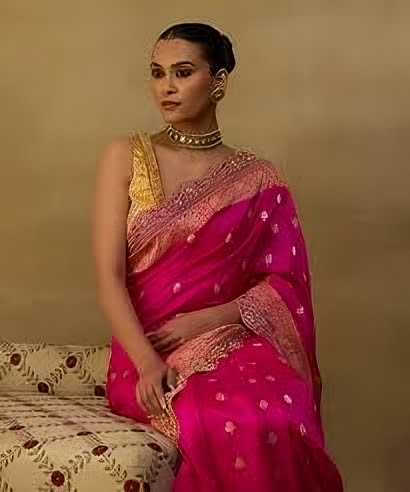
Embroidered Tinsel Sarees are the pride of West India. The embroidered tinsel saree is a dazzling testament to the rich cultural heritage of India, blending traditional craftsmanship with contemporary elegance. Originating from the vibrant tapestry of Indian textiles, these sarees have evolved over centuries, reflecting diverse regional influences and artistic techniques.


The history of embroidered tinsel sarees can be traced back to ancient India, where skilled artisans meticulously embellished textile fabrics with metallic threads, beads, and sequins. Over time, the artistry of saree embroidery expanded to incorporate metallic threads, known as tinsel, adding a lustrous sheen to the fabric. The method of creating embroidered tinsel sarees is a laborious and intricate process that requires precision and patience. The saree fabric is first selected, usually silk or chiffon, for its ability to hold the elaborate embroidery. Then, fine metallic threads, often made of gold or silver, are delicately woven into the fabric using specialized needles and techniques such as zardozi, dabka, or gota patti. These methods result in exquisite designs ranging from floral patterns to geometric motifs, each reflecting the cultural heritage of its region.

Embroidered tinsel sarees come in a variety of styles, each with its own unique characteristics.  For example, Banarasi sarees from Varanasi are renowned for their intricate zari work, while Kanjivaram sarees from Tamil Nadu feature stunning gold and silver thread embroidery. Other popular styles include Chikankari sarees from Lucknow and Bandhani sarees from Rajasthan, each reflecting the cultural heritage of their respective regions.

In conclusion, embroidered tinsel sarees stand as a testament to India's rich textile heritage, blending traditional techniques with contemporary designs to create garments of timeless beauty. Embrace the allure of embroidered tinsel sarees and add a touch of glamour to your wardrobe today.


Tuesday, 4 June 2024

 Bark Type Spices: Exploring Nature's Flavors

Bark spices, also known as "bark herbs" or "bark seasonings," are a group of aromatic spices derived from the bark of trees. These spices are valued for their distinct flavors, fragrances, and medicinal properties, and they have been used in culinary, medicinal, and cultural practices for thousands of years.

History:

The use of bark type spices dates back to ancient times when they were prized for their medicinal properties and culinary value. These spices were used in a variety of cultures around the world for their distinct flavors and aromas. In many ancient civilizations, such as Indian Ayurveda and Chinese medicine, bark type spices were believed to possess healing properties and were used to treat various ailments.

Ingredients:

Bark type spices are derived from the barks of trees and shrubs. They are typically harvested from the outer layers of the plant's bark and can be used in their whole form or ground into a powder. Common examples of bark type spices include cinnamon, cassia, and sassafras, each with its unique flavor profile and characteristics.

Types:

One of the most popular bark type spices is cinnamon, known for its warm and sweet flavor profile. Cassia, a close relative of cinnamon, has a stronger and more pungent taste. Sassafras, with its distinct root beer-like flavor, is another well-known bark type spice. Other varieties include dried citrus peel, allspice, and bay leaves, each adding a unique taste to dishes.

Uses:

Bark type spices are versatile ingredients used in both sweet and savory dishes. Cinnamon is often used in baking, desserts, and curries, while cassia is commonly found in Chinese cuisine and spicy dishes. Sassafras is used to flavor soups, stews, and beverages. These spices can also be infused into teas, used in marinades, or added to spice blends for an extra kick of flavor.

In conclusion, bark type spices add depth and complexity to dishes, bringing a touch of history and culture to the dining table. Whether you're exploring new recipes or adding a twist to old favorites, these spices offer a world of possibilities for culinary creativity and enjoyment."


Sarees of East India: A Tapestry of Tradition and Elegance


The saree, a quintessential symbol of Indian culture, holds a special place in the hearts of millions. In East India, this traditional attire embodies a rich heritage, with each weave telling a story of craftsmanship and tradition. Sarees hold a special place in the hearts of Indian women, and each region in India boasts its own unique styles and techniques of saree-making. In East India, particularly in states like West Bengal, Odisha, and Assam, sarees are not just garments - they are pieces of art that embody centuries of tradition and culture.


One of the most famous types of sarees from East India is the Baluchari saree, originating from the town of Baluchar in West Bengal. These sarees are known for their intricately woven silk fabric depicting mythological scenes and nature motifs. Another renowned saree from East India is the Sambalpuri saree from Odisha. These sarees are handwoven using a unique tie-and-dye technique known as 'Ikkat'. The intricate designs on Sambalpuri sarees often feature traditional motifs like shells, flowers, and animals, showcasing the skill and craftsmanship of the weavers.

The northeastern states of India also contribute to the rich tapestry of Eastern sarees. Assam is famous for its Muga silk sarees, woven from the golden silk produced by the indigenous Muga silkworms. These sarees are prized for their natural sheen and durability, often adorned with intricate Assamese motifs inspired by nature. The history of south East Indian sarees is as fascinating as the garments themselves. Many of these saree traditions date back centuries, with techniques passed down through generations of artisans.

In conclusion, sarees from East India are not just garments but a representation of the rich cultural heritage and artistic traditions of the region. The types, methods, and history of East Indian sarees reflect the deep-rooted connection between art, tradition, and history, making them a true symbol of Indian craftsmanship and elegance.

Thursday, 30 May 2024

Types of spices


Indian spices exhibit a great variety which adds different flavours and aroma to the food making them more luscious and in certain cases healthy. There is a popular belief that spicy foods are bad for health. This belief is not only far from the truth but also that; spices in fact have medicinal properties and are good for health.


 Spices are the essence of culinary art, infusing dishes with flavor, aroma, and often a touch of cultural heritage. From the pungent warmth of cinnamon to the fiery kick of chili peppers, spices add depth and character to dishes around the world. Let's delve into the diverse world of spices and explore their various types and uses.

 1. **Cinnamon**: Derived from the inner bark of several trees from the genus Cinnamomum, cinnamon is renowned for its sweet, warm flavor. It's commonly used in both sweet and savory dishes, such as desserts, curries, and mulled beverages.

 2. **Turmeric**: This vibrant yellow spice comes from the Curcuma longa plant's rhizome and is a staple in Indian and Southeast Asian cuisine. Turmeric offers a mildly aromatic flavor with earthy undertones and is prized for its vivid color and purported health benefits.

 3. **Cumin**: Cumin seeds, obtained from the Cuminum cyminum plant, impart a distinctive warm and nutty flavor to dishes. Widely used in Middle Eastern, Mediterranean, and Indian cooking, cumin adds depth to curries, stews, and spice blends like garam masala.

 4. **Paprika**: Made from ground, dried peppers of the Capsicum annuum family, paprika varies in flavor and heat intensity depending on the pepper used. It can range from mild and sweet to hot and smoky, enhancing everything from soups to meat rubs.

 5. **Ginger**: The pungent, zesty flavor of ginger comes from the rhizome of the Zingiber officinale plant. Whether fresh or dried, ginger is a versatile spice used in both sweet and savory dishes, including stir-fries, baked goods, and teas.

 6. **Chili Powder**: A blend of various ground chili peppers, along with other spices like cumin and garlic powder, chili powder adds fiery heat and rich flavor to Tex-Mex dishes, chili con carne, and marinades.

 7. **Cloves**: These aromatic flower buds of the Syzygium aromaticum tree boast a strong, sweet, and spicy flavor. Cloves are often used whole or ground in baking, desserts, and savory dishes like stews and biryanis.

 8. **Cardamom**: With its unique floral and citrusy flavor, cardamom seeds, and pods are popular in Indian, Middle Eastern, and Scandinavian cuisines. It adds depth to dishes ranging from curries to desserts and even coffee.

 These are just a few examples of the vast array of spices that tantalize our taste buds and elevate our culinary creations. Experimenting with different spices can open up a world of flavor possibilities in your cooking endeavors.

 In conclusion, spices come in a wide range of varieties and each type offers its own unique flavor profile to enhance dishes. Whether used individually or in combination, spices play a crucial role in elevating the taste and aroma of food. Experimenting with different types of spices can lead to exciting and delicious culinary creations, making them an essential component of the culinary world.


Monday, 26 February 2024

Rahul Acharya


At the tender age of four years, Rahul Acharya started learning Odissi dance from illustrious guru Shri Durga Charan Ranbir. This child prodigy was born on 7th December in the year 1982. Rahul Acharya believed to have a strong feeling for the Odissi dance in its highly religious structure that can only be seen in the Jaganatha's culture. He has also bagged the rare quality of studying the most difficult yoga namely, Hatha Yoga and Raja Yoga at the Satyananda Yoga Vidyalaya, Bihar School of Yoga. These two types of yogas are said to perform by the sages. Other than his dance, Rahul is an avid devotee of Lord Jagannatha and well versed in Sanskrit. He enjoys reading and researching on Shastras (Scriptures) and bringing them to the forefront through his dance.

Internationally renowned as a virtuosic artist, he has performed all over the globe – in Europe, Asia, Africa, the Middle East, Central America, and throughout the United States. Rahul has danced extensively in India, participating in many of the most celebrated festivals. In 2010 he received the honor of being a soloist in the Khajuraho Dance Festival. Amongst his 2009 performances were Natya Tarangini’s Parampara Series, several Sangeet Natak Akademi sponsored engagements in Tamil Nadu, and the Kumbhalgarh Dance Festival. He has danced at the Mukteswar, Konark, Puri Beach, and Udayshankar Dance Festivals, as well as many more. Other appearances include ones at Kalakshetra and the National Centre for Performing Arts.

Rahul Acharya has also given several lecture demonstration on Jagannatha culture and on the traditional dance form, Odissi.

Some his noted lecture demonstrations are:

1. Lecture Demonstrations organized by SPIC MACAY at IIT, Kharagpur.

2.Lecture demonstrations at premier national institutes like the Indian Institute of Technology (IIT), Indian Institute of Management (IIM), Indian Institute of Sciences (IISc), Bangalore.

3. Lecture demonstrations at Shantiniketan, Vishwabharati University, West Bengal.

4. Lecture demonstrations at Universities in Reunion Islands.

5.Lecture demonstrations at Universidad Catolica Andres Bello, Caracas, Venezuela. Lecture demonstrations at Colegio Timoteo Aguire, Merida, Venezuela.

 6. Lecture demonstrations at Universidad de Los Andes, Bogota, Colombia.

7. Lecture demonstrations at Incolballet, Cali, Colombia.

Thursday, 22 February 2024

Vyjayanthi Kashi

 Vyjayanthi Kashi is an Indian Kuchipudi dancer popular not only among the Indian audience, but also among the overseas audience. Her style of dance is praiseworthy to the critics and she was proficient in theatre also. Vyjayanthi Kashi is a reputed Kuchipudi dancer, a celebrated performer and choreographer and artistic director of a dance school Shambhavi School of Dance, where they teach this traditional dance form Kuchipudi.


Vyjayanthi Kashi is the daughter of the late J.M. Vishwanth and late G.V. Girijamma. Vyjayanthi Kashi started learning Bharatanatya from Ramanna of Tumkur at the age of six. Eventually, she topped the State with a first rank and also won a golden chain. Initially she was not so interested in dance, so eventually she took theatre where she worked with T. S. Nagabharana who is an Indian film director, in the Kannada film industry. She married Vijaya Kashi, a television and theatre artist whom she met while acting in theatre.[10] She took up a job in a bank which later she left as she fully dedicated to dance. She has a daughter Prateeksha Kashi, who is also a kuchipudi dancer.

She holds a fellowship from the Government of India in Kuchipudi and continues with her research on "Influence of Yakshagana on the Solo Kuchipudi Repertoire". She contributes articles on her chosen subject. Vyjayanthi has conducted thought- provoking workshops, lecture demonstrations in India, U.A.E., Malaysia, Ethiopia, and other countries. She has to her credit more than a 1000 performances in India and abroad. One of Vyjayanthi's specialty is the Mayurakautam or picturisation of peacock, a ritualistic dance form practiced several years ago by the temple dancers (performed by only a few dancers today). In her most dramatic roles, she has portayed the woman as a victim of her time, her society, her family and her man. She has to her credit more than a 1000 performances in India and abroad. One of Vyjayanthi's specialty is the Mayurakautam or picturisation of peacock, a ritualistic dance form practiced several years ago by the temple dancers (performed by only a few dancers today). In her most dramatic roles, she has portayed the woman as a victim of her time, her society, her family and her man.

Personal Life of Vyjayanthi Kashi

Vyjayanthi Kashi married Vijaya Kashi, who is a television and theatre artist whom she met while acting in theatre. Vyjayanthi Kashi took up a job in a bank which later she left as she fully dedicated to dance. The couple is blessed with a daughter Prateeksha Kashi, who is also a Kuchipudi dancer.

Monday, 19 February 2024

Indian Dance Festivals

 India is a culturally rich country with varied dance forms. Since ancient days dance had been a well accepted performing art and had been reflecting diverse cultural traditions. India presents an amazing variety of dances; certain dances are religious in nature, while others are performed primarily for the purpose of entertainment or marking a festive occasion. The recognition of this performing art has initiated the exponents and admirers to organise a wide range of dance festivals across the length and breadth of the country.

India Dance Festivals are organised with an intention to promote the classical and regional dances of the state. These dance festivals can be regarded as a cultural fest and a platform to encourage the upcoming performers to keep the cultural legacy of the land intact. As the popularity of the classical dance forms in India increased, dance festivals came to be organized in a few temples, with the aim of bringing the religious dances and temples close to each other. Amongst the most notable examples in this context is the Khajuraho Dance Festival, which was first held some 20 years ago, amidst the backdrop of erotic sculptures. It proved to be one of the exclusive festivals of the modern times and enjoys immense popularity till date. With time, several other dance festivals also came to be organized across India.

The famous dance festivals of modern India include the Chennai dance and music festival, Pragjyoti International Dance festival, Pattadakal Dance Festival, Khajuraho Dance Festival, Mamallapuram Dance Festival, Chidambaram Dance Festival, Konark Dance Festival and many more.

Khajuraho Dance Festival:- Khajuraho Dance Festival is a weeklong dance festival and is held during the months of February and March in Khajuraho. This cultural extravaganza is organized by the Madhya Pradesh Tourism Department and is promoted as one of the major cultural event in Khajuraho. This cultural event takes place at an open-air auditorium in front of the Chitragupta Temple.

Nishagandhi dance festival:- Nishagandhi Dance Festival popularly known as Nishagandhi Nritya Utsav is celebrated twice a year, once in the month of October-November and then in the month of March-April in the Nishagandhi Theatre, in Kanakunnu palace compound, in the city of Trivandrum or Thiruvananthapuram, Kerala. This festival is about a week long and witnesses participation from artisans all over the country.

Rajgir dance festival:- This dance festival has attracted the attention of the tourists as well as the locals of Rajgir. Rajgir dance festival comprises performance of various singers and dancers from all over the country.

Konark Dance Festival:- India is a country of rich cultural heritage. The religion, arts and crafts in the Indian culture are so well intermingled with each other that it is almost impossible to segregate them. There are also so many varied forms of music and dances that each region has a special music and dance form of its own which has originated from the deep rooted cultural and religious practices of that specified region.

Visit the page to learn more about Indian Dances Festivals


Thursday, 15 February 2024

Sujata Mohapatra

 Sujata Mohapatra has been regarded as the appropriated prototype of 'beauty and poise'. She was inducted to this art form in her childhood. Since her childhood she has shown an intrinsic love for dance. Sujata Mohapatra was born and raised into a wealthy family that was enriched with an artistic environment. This kind of environment nurtured her creativity and brought out her inborn artistic style.

Born into a rich cultural background, she grew up in an artistic environment that delicately nourished her creativity and brought out her innate interest in dance. An artistic environment at home and encouraging parents gave Sujata the impetus to learn Odissi.She has completed more than eighteen years of training under the guidance of her Guru and simultaneously been trained by her husband Guru Ratikant Mohapatra at Srjan. She has also done a valuable stint at the Guru Kelucharan Mohapatra Odissi Research Centre.

Sujata Mohapatra apart from performing dance also in an active manner involved in teaching Odissi. She holds the position of principle of the premier institution of dance, Srijan (Odissi Nrityabhasa), founded by his father -in-law. 'Lithesome movements, awesome stamina and large radiant eyes' are the attributes of this outstanding performer. Experiencing her spellbound execution of Odissi dance, her audiences got awestruck. Her dance reflects the unagitated grace, vividness of expression and technical flawlessness that are considered to be the 'unbending adherence to Guruji's style' from her part. Sujata Mohapatra is actively involved in teaching Odissi. She is the Principal of 'Srjan' (Odissi Nrityabasa), a prime Odissi Dance Institution founded by MGuru Kelucharan Mohapatra She holds a master's degree in Oriya Literature from Utkal University, and has done research work at the Odissi Research Centre, Bhubaneshwar.In July 2011, she opened an Odissi Institute - Guru Keerti Srjan, in her hometown, Balasore.

Ms. Mohapatra has a compelling and arresting stage presence, with an exhilarating combination of intensity and spontaneity, and her dance is noteworthy for its grace, depth of expression and technical perfection. Widely travelled over the world as a soloist and a leading member of the Srjan Dance Troupe, she also runs this dance school along with her husband Ratikant Mohapatra, who is also a leading Odissi dancer, choreographer, and musician. Ms. Mohapatra often conducts workshops in the major centres of Odissi teaching across India and the world. Her significant performances have been at the Konark Dance Festival, Mukteshwar Dance Festival, Khajauraho Dance Festival, etc.


Wednesday, 14 February 2024

History of Bharatnatyam

 Bharatanatyam, rooted in ancient Indian traditions, finds its origins in the Natya Shastra and the temple traditions of devadasis. Despite facing suppression during the colonial era, Bharatanatyam experienced a remarkable resurgence and revival due to the efforts of visionaries like E. Krishna Iyer and Rukmini Devi Arundale.

Bharatnatyam, one of the oldest dance forms of India, has a rich and fascinating history that dates back thousands of years. It originated in the temples and courts of southern India and was nurtured under the Devadasi system, where women dedicated themselves to serving deities as dancers and musicians. The art form was passed down from generation to generation, with the devadasis and male gurus (nattuvanars) being the custodians of this ancient tradition.

Bharatnatyam in Colonial Era

During British colonial rule, classical Indian dance forms, including Bharatnatyam, faced ridicule and discouragement. The colonial authorities associated these dance forms with debased erotic culture and sought to suppress them. In 1910, the Madras Presidency of the British Empire banned temple dancing, which effectively ended the tradition of Bharatnatyam performances in Hindu temples.

Natya Shastra is attributed to the ancient scholar Bharata Muni, and its first complete compilation is dated to between 200 BCE and 200 CE, but estimates vary between 500 BCE and 500 CE. The most studied version of the Natya Shastra text consists of about 6000 verses structured into 36 chapters. The text, states Natalia Lidova, describes the theory of Tāṇḍava dance (Shiva), the theory of rasa, of bhāva, expression, gestures, acting techniques, basic steps, standing postures—all of which are part of Indian classical dances. Dance and performance arts, states this text, are a form of expression of spiritual ideas, virtues and the essence of scriptures.

 Historical references to dance are found in the Tamil epics Silappatikaram and Manimegalai (c. 6th century). The ancient text Silappatikaram, includes a story of a dancing girl named Madhavi; it describes the dance training regimen called Arangatrau Kathai of Madhavi in verses 113 through 159. The carvings in Kanchipuram's Shiva temple that have been dated to 6th to 9th century CE suggest dance was a well-developed performance art by about the mid 1st millennium CE. Bharatanatyam is traditionally a team performance art that consists of a solo dancer, accompanied by musicians and one or more singers. It is described as classical art because the theory of musical notes, vocal performance, and the dance movement reflect ideas of the Sanskrit treatise Natya Shastra and other Sanskrit and Tamil texts, such as the Abhinaya Darpana. In modern adaptations, Bharatanatyam dance troupes may involve many dancers who play specific characters in a story, creatively choreographed to ease the interpretation and expand the experience by the audience.


Wednesday, 7 February 2024

Folk Dances of Himachal Pradesh

 Dance and Music form an inseparable aspect from the lives of people in Himachal Pradesh. Himachal Pradesh is an Indian state which is known for its vibrant colors of both the people and their culture. Variant folk dances are performed on every auspicious occasion and festival. The performances draw a high influence from the mythological epics of the Mahabharata and Ramayana. The folk music also displays identity and tribal culture of the people. It is based mainly on affection, separation, seasons and gallantry. Men and women get decked up in their traditional attires and dance to glory.


Some of the popular folk dances are listed below

Dangi:- Dangi folk dance is based on one of the oldest folklore of Himachal Pradesh. The dance is performed during the harvest season. It has two themes one is love and another is business. The love-based theme folklore is about a very brave and handsome kind who fell in love with a common girl. It was not common for kings to fall in love with commoners so it was a big deal.

Mala Dance:- Kayang Mala is a dance form in which dancers form a garland-like pattern by weaving each other's arms and becoming beads of the garland. Every performer is well dressed and heavily decorated with jewellery. Before commencing the dance, they are supposed to drink Chhang, which is a local drink. Kayang Mala is one of the most popular traditional dances in Himachal Pradesh

Dalshone and Cholamba Dances:- These dance forms originated from the Ropa valley. In this dance form, there are patterns formed by the performers which look like coiled serpents. The Cholamba is performed generally whenever a tiger is killed. The skin of dead animal is stuffed and a gold ornament is put in its nose. The remains of dead is rotated after that and the people dance around it.

FOR MORE VISIT THE PAGE LINK:- https://www.indianetzone.com/1/folk_dances_himachal_pradesh.htm

Thursday, 1 February 2024

Methil Devika

 Methil Devika is an Indian dance personality of classical style. She is a dance research scholar, educator, performer and choreographer. She is hailing from Palakkad town in Kerala. Methil Devika hosts a number of national and international based dance programs not only in India but also in abroad. She is a veteran dancer, research scholar, educationalist, trainer and choreographer, who is experimenting in Asian and Pan Asian culture.

In 2018, Devika created the short film documentary Sarpatatwam or The Serpent Wisdom. She set the lyrics to music, choreographed and performed the dance, also serving as co-director and co-producer. The film was voted into the contention list of the Academy Awards in 2018. It premiered at the Prestige Theatres, LA and was also screened at various international theatres. It was also the opening film at the National Film Archive of India, Pune.Her work Ahalya which was commissioned by Sampradaya Dance Company also opened to world premiere in May 2021. It was based on reflections in solitude done during Covid lockdown and the music and dance being composed by herself.

Methil Devika’s performances across the country and abroad have been praised for expressing human emotions through her skillful Mohiniyattam. She has performed in various major festivals like Kerala Fine Arts Society and the Ustad Bismillah Khan Yuva Puraskar youth festival. Methil Devika has also judged many festivals, among which Chilanka Dance Festival  in Thiruvananthapuram of 2017 is one of the most prominent ones. She has also been a part of the theatre adaption of the play ‘Naaga’ in 2015. In 2017, Methil Devika made her debut in the film ‘Humans of Someone’. She has appeared in and provided the narration of the short documentary film ‘Sarpatatwam’. Methil Devika is an ‘A’ grade artiste in Doordarshan and she was also a part of SPIC MACAY (Society for the Promotion of Indian Classical Music and Culture Amongst Youth). She was also empaneled with the Indian Council of Cultural Relations Delhi.

Wednesday, 24 January 2024

Caste System under Hindu Kingdoms

During the early medieval period the relations between all the castes were very cordial and marriages could also take place between them. The caste of an issue was determined according to that of his or her father. India presents a progressive society as compared with the later period of the Medieval Age.


Brahmans were respected the most. They specialised in learning and knowledge. They were also the advisers or the ministers of the king. They were engaged mainly in study, teaching, performing sacrifices and charitable functions. The spread of Buddhism reduced their power. Brahmans were now engaged in business, trade, and also worked as an artist. They enjoyed many facilities denied to other castes for instance they could not be awarded capital punishment.

During the time of the Rigveda (1500 - 1200 BCE), there were two varnas: arya varna and dasa varna. The distinction originally arose from tribal divisions. The Vedic tribes regarded themselves as arya (the noble ones) and the rival tribes were called dasa, dasyu and pani. The dasas were frequent allies of the Aryan tribes, and they were probably assimilated into the Aryan society, giving rise to a class distinction.Many dasas were, however, in a servile position, giving rise to the eventual meaning of dasa as servant or slave.

The Rigvedic society was not distinguished by occupations. Many husbandmen and artisans practised a number of crafts. The chariot-maker (rathakara) and metal worker (karmara) enjoyed positions of importance and no stigma was attached to them. Similar observations hold for carpenters, tanners, weavers and others.

Towards the end of the Atharvaveda period, new class distinctions emerged. The erstwhile dasas are renamed Shudras, probably to distinguish them from the new meaning of dasa as slave. The aryas are renamed vis or Vaishya (meaning the members of the tribe) and the new elite classes of Brahmins (priests) and Kshatriyas (warriors) are designated as new varnas. The Shudras were not only the erstwhile dasas but also included the aboriginal tribes that were assimilated into the Aryan society as it expanded into Gangetic settlements. There is no evidence of restrictions regarding food and marriage during the Vedic period.


Thursday, 11 January 2024

Types of Religion in India

 Hinduism is a religion that does not have a single founder, a specific theological system, a single system of morality, or a central religious organization. The definition of Hinduism entails that it is a term which denotes the religions of the majority of people in India. Hinduism is world’s third largest religion after Christianity and Islam. Hinduism is the dominant religion in India, where Hindus form about 84 per cent of the total population. As per the scholars, the actual term ‘Hindu’ first occurred as a Persian geographical term for the people who lived beyond the Indus River. Hinduism is the amalgamation of thousands of different religious groups that have evolved in India since 1500 BC.

Evolution on Hinduism Religion

Hinduism is often regarded as the oldest religion in the world, with roots tracing back to prehistoric times, over 5,000 years ago.Hinduism spread through parts of Southeastern Asia, China, and Afghanistan. Hindus worship a single divine entity (paramatma, lit."first-soul") with different forms.An early 19th century manuscript of the Rigveda written in Devanagari Hinduism's origins include the cultural elements of the Indus Valley Civilisation along with other Indian civilisations. The oldest surviving text of Hinduism is the Rigveda, produced during the Vedic period and dating to 1700–1100 BCE During the Epic and Puranic periods, the earliest versions of the epic poems, in their current form including Ramayana and Mahabharata were written roughly from 500 to 100 BCE,although these were orally transmitted through families for centuries prior to this period.

More topics related to Hinduism Religion Chitpavan Brahmins, Iyer Brahmin, Brahmin Castes in India, Vaishya